
Getting Your Fireplace Ready for the First Fire of the Season
A short North Texas checklist to run through before you light the first fire of the year.
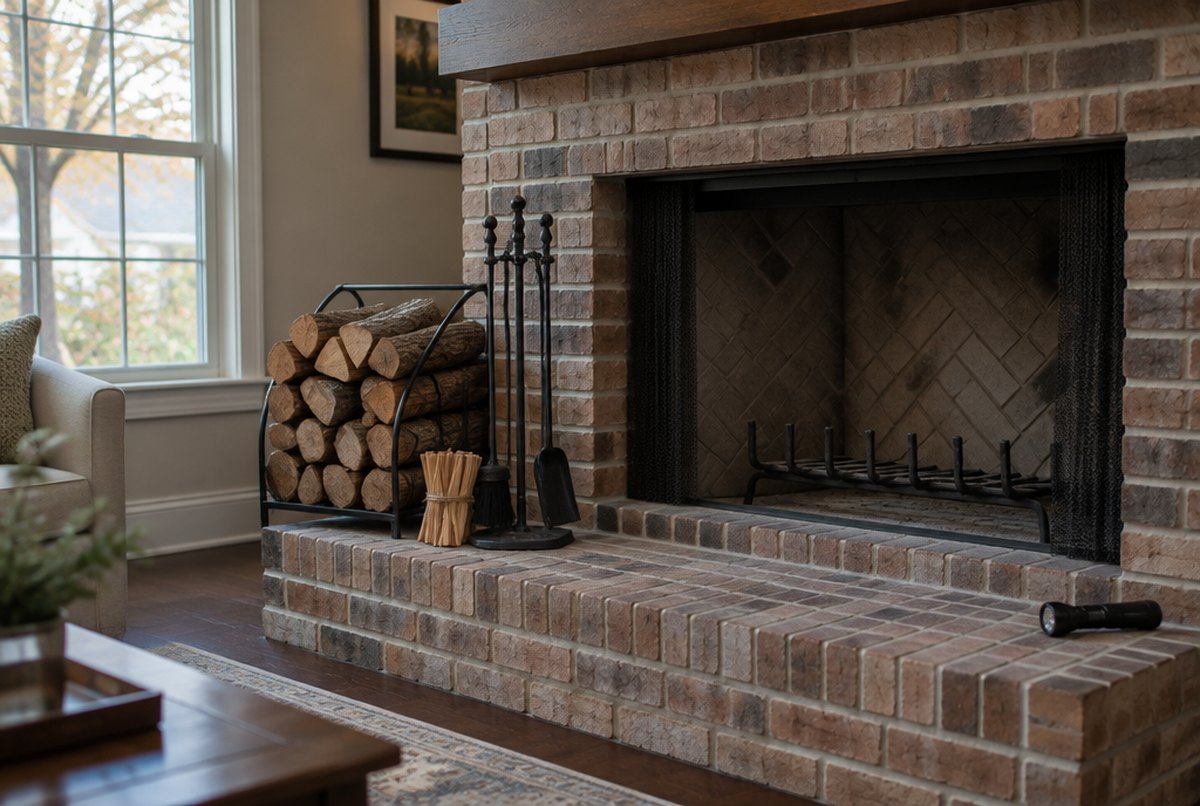
Before the first fire of the season, open the damper and look up the flue, clear old ash out of the firebox, check the cap and hearth for damage, test your smoke and carbon monoxide alarms, and confirm the chimney was swept within the past year. In North Texas the fireplace sits idle through a long hot summer, so animals, damp soot and a stuck damper are the usual surprises. Then light a small fire and watch the first ten minutes. Smoke should rise up the flue, not drift into the room. If it does not, put the fire out and call a sweep before you try again.
Why the first fire of the year deserves a pause
A fireplace that has been cold since April is not the same fireplace you shut down last winter. Spring storms may have knocked a cap loose, a squirrel may have moved in, and the soot left on the flue walls has spent the summer soaking up humid Texas air. None of that shows from the couch. It shows up when you light a match, usually as smoke in the room or a smell you cannot place. A few minutes of checking beforehand costs nothing and catches most of it.
The first real cold snap in DFW often arrives in November, sometimes earlier, and that is also when everyone remembers their chimney at once. If you do the checks below now, you have time to book a sweep before the rush.
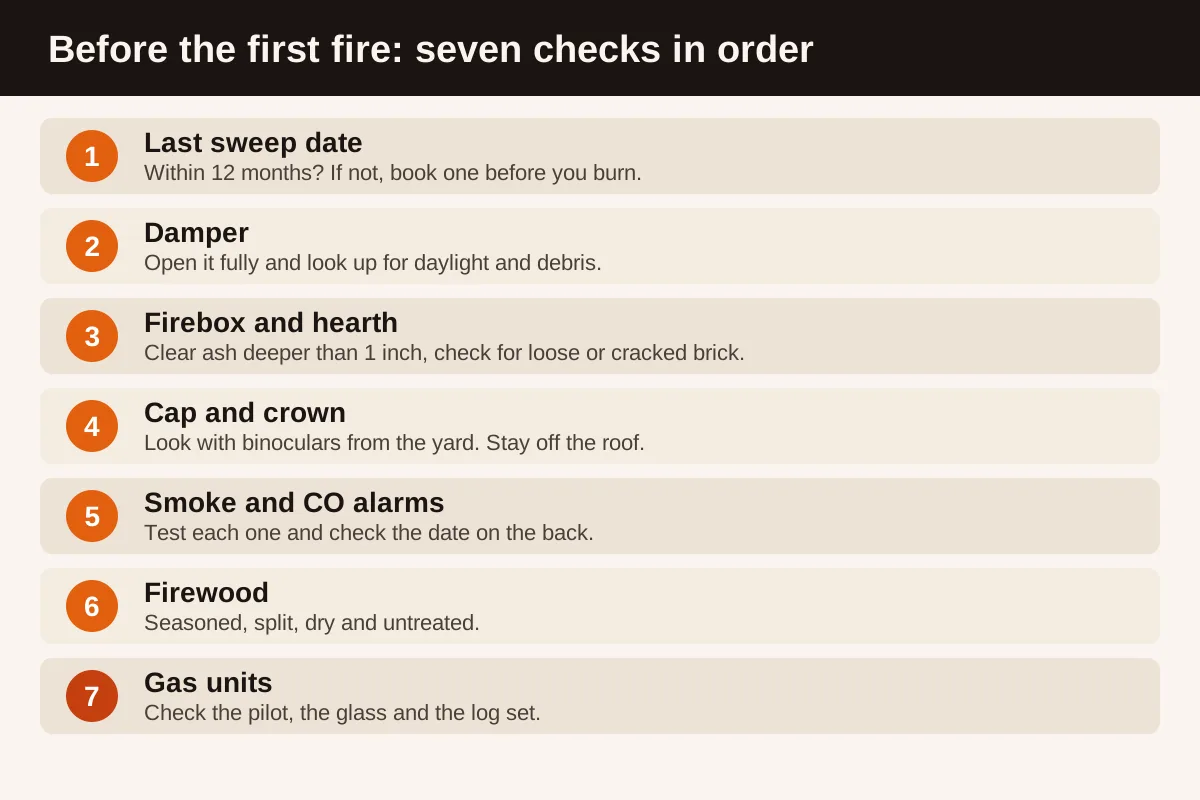
1. Find the date of your last sweep
The national chimney standard, NFPA 211, calls for an inspection at least once a year, whether or not you burned much. The Chimney Safety Institute of America adds a practical trigger: sweep when there is about an eighth of an inch of sooty buildup on the flue walls. That much is easy to reach in a single heavy winter. If you cannot remember the last sweep, or it was more than a year ago, treat the chimney as overdue. Our guide to how often to clean a chimney in North Texas goes through the schedule, and the three creosote stages show what you are trying to avoid.
2. Open the damper and look up
With the fireplace cold, open the damper all the way and shine a flashlight up the flue. You should see a clear patch of sky or at least a clean, open passage. A bird nest, a pile of leaves or a dark plug means stop here. If the handle will not move or the plate sits crooked, do not force it, because a damper that fails halfway open on a burning fire is a bigger problem than one you found today. If you are not sure which part is which, our plain English map of the fireplace will help.
3. Clear the firebox and look it over
Scoop out old ash once it is deeper than about an inch, since a deep bed smothers airflow and the coals underneath can stay hot for days. Use a metal container with a lid and keep it outdoors and away from the house. Then look at the firebrick and hearth. Hairline cracks in the mortar are common. Loose bricks, missing mortar or a gap you could slide a coin into are worth a technician's attention before you build a fire against them.
4. Check the cap and crown from the yard
Binoculars are the safe way to look at the top of the chimney. You are checking that the cap is still there, the mesh is intact, and the crown, the concrete slab around the flue, is not cracked or crumbling. After a spring of North Texas hail and wind, caps are one of the first things to go missing. Please stay off the roof for this one. If the cap is gone or bent, the chimney is open to rain and animals, and chimney cap installation is a quick fix. If you hear scratching or see nesting material, chimney animal removal should come before any fire.
5. Test your smoke and carbon monoxide alarms
Press the test button on each one and put in fresh batteries if the alarm chirps. Carbon monoxide alarms wear out, so check the replacement date printed on the back. Fireplaces and CO are a bad mix when the flue is blocked, and you want a working alarm on every level and near the bedrooms before the first fire, not after a headache that will not go away.
6. Check your firewood
Good firewood is split, seasoned for at least six months and dry enough that two pieces knocked together make a hollow crack instead of a dull thud. Wet wood smolders, makes more smoke and leaves more creosote behind. Never burn painted or treated lumber, pallets, trash or wrapping paper beyond a little kindling. Keep the stack off the ground and covered on top, and bring a day's worth inside so it is not damp when you light it.
7. If you have a gas fireplace
Gas units have a different checklist. Confirm the pilot lights, wipe the glass, and check that the log set sits where it was placed so it does not block the flame. If the pilot will not stay lit or you smell gas, turn off the supply and call a technician. Our gas fireplace maintenance guide covers what a gas unit needs each year.
How to light the first fire
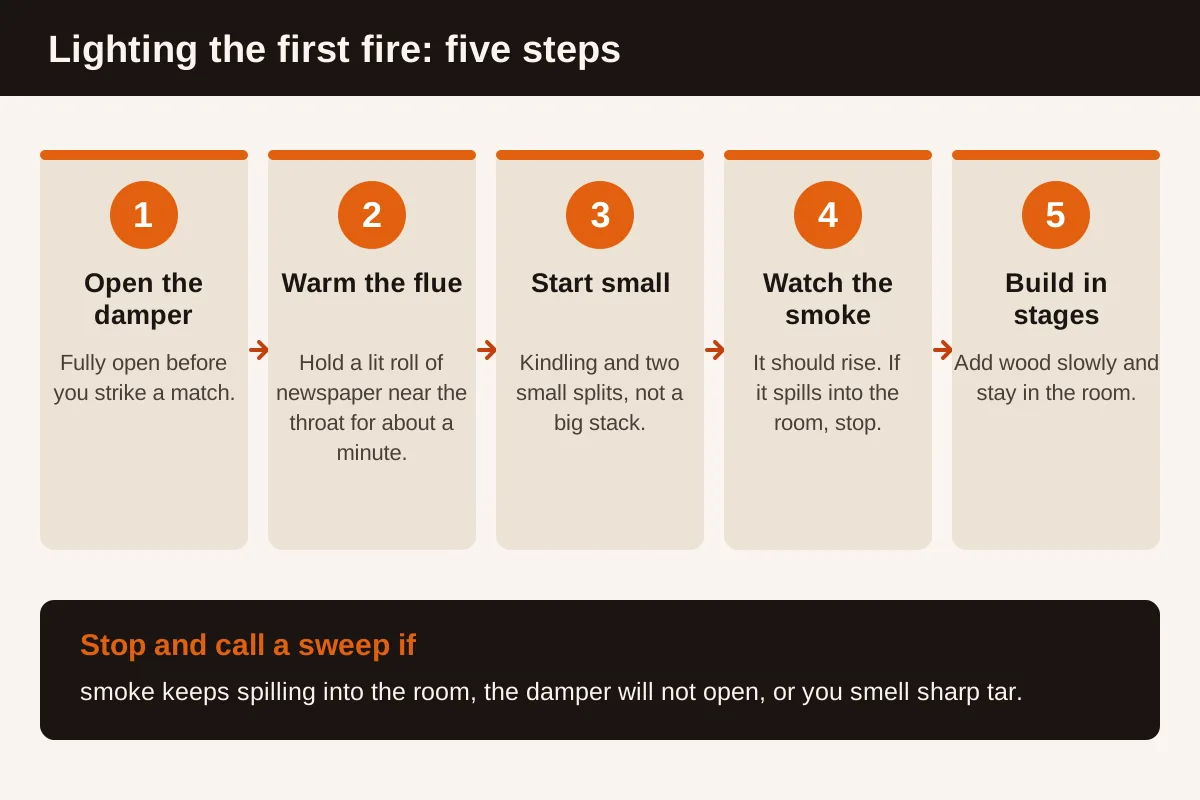
This is where a cold North Texas flue causes trouble. A flue that has been sitting cold holds a heavy column of cool air, and that air can push down into the room when you light kindling. Warming the flue first gets the draft moving the right way, and our chimney draft guide explains the physics. Open the damper, hold a lit roll of newspaper near the throat for about a minute, then build a small fire with kindling and a couple of small splits. Add larger pieces once the flames are steady. Keep the screen or doors closed and stay in the room until the fire has died down.
What the first fire may smell like
A little dusty, burnt smell in the first half hour is normal and comes from dust and summer residue burning off. A musty smell on a humid day usually means damp soot. A sharp, tarry smell that lingers points to creosote, and our piece on why a fireplace smells sorts out which is which.
When to put the fire out and call
Stop if smoke keeps rolling into the room after the first few minutes, if the damper will not stay open, or if the fire sounds like a roaring or crackling inside the chimney. That last sign can mean a chimney fire. Close the glass doors if you have them, get everyone out and call 911, and read how to put out a chimney fire and what causes one before you ever need them. For any smoke problem that is not an emergency, let the fire burn down on its own, ventilate the room and book an inspection before burning again.
What a pre-season sweep and inspection covers
A professional sweep clears the soot and creosote, and the inspection that goes with it looks at the flue, firebox, damper, cap and crown with a light and, when needed, a camera. It is the one step on this list you cannot do properly yourself. Our chimney sweep and cleaning service starts at $99 and includes an inspection, with the final price depending on the type of chimney, access and how much buildup there is. If the inspection turns up something that needs repair, the rest of what we do is listed on our chimney services page.
Want it checked before the first cold snap?
We sweep and inspect fireplaces across Dallas and Fort Worth, and we show you photos of what we find. Based in Plano, working across DFW since 2013.
Common questions about the first fire of the season
What should I do before lighting my fireplace for the first time this season?
Confirm the chimney was swept in the past year, open the damper and look up the flue, clear ash and check the firebox, look at the cap from the yard, and test your smoke and carbon monoxide alarms. Then start with a small fire.
Do I need a sweep if I only burned a few fires last winter?
An annual inspection is still recommended, because most chimney problems come from weather and age as much as from use. The inspection tells you whether a sweep is needed.
Why does my fireplace smoke when I light the first fire?
A cold flue holds a column of heavy air that can push smoke back into the room. A closed or partly open damper, a blocked cap or a nest in the flue can cause it too.
Is it normal for the fireplace to smell at the first fire?
A light dusty smell is normal for the first half hour. A strong tarry or musty smell that lingers points to creosote or damp soot and is worth an inspection.
When should I book a chimney sweep in DFW?
Before the first cold snap. Sweeps get busy once temperatures drop, so booking in October leaves room to schedule any repairs the inspection finds.