
How Often Should You Clean a Chimney in North Texas?
The short answer is once a year for most wood-burning fireplaces, and why gas fireplaces and rarely used chimneys still need the same annual check.
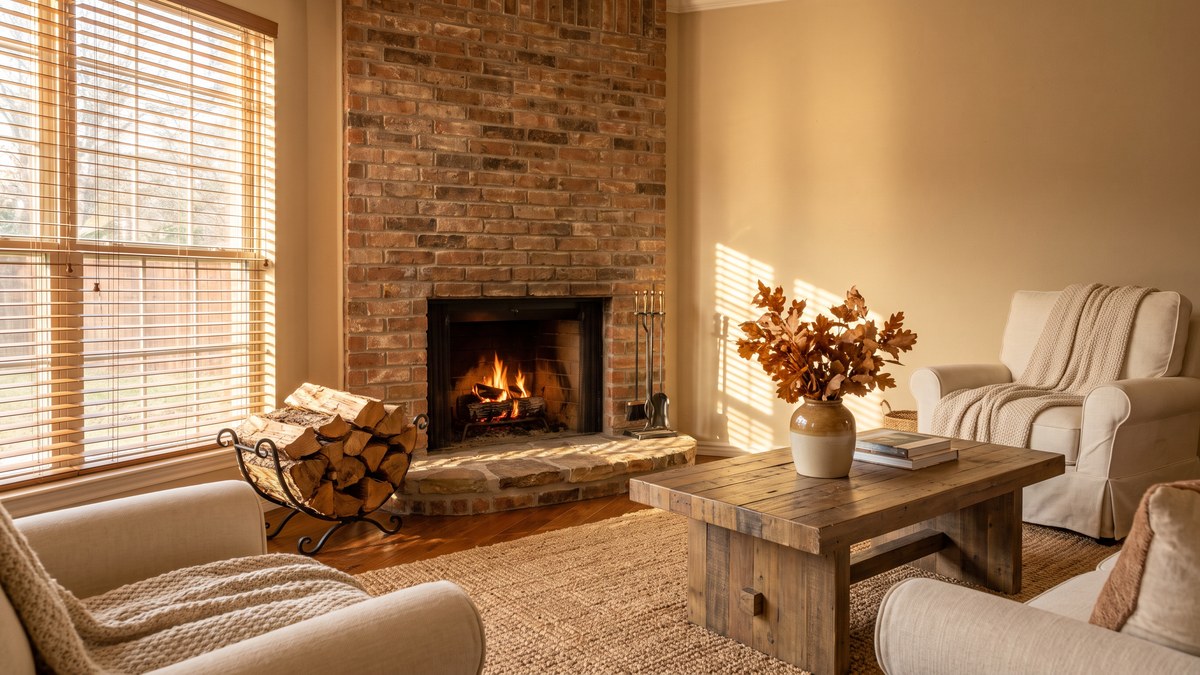
Most wood-burning fireplaces need a professional sweep once a year. NFPA 211, the standard CSIA certified sweeps work from, calls for an annual inspection on every chimney no matter how often you burn, plus a cleaning once creosote inside the flue reaches about an eighth of an inch. Burn three or more nights a week through a Texas winter, run a wood stove instead of an open fireplace, or feed the fire unseasoned wood, and you can hit that mark before the year is out.
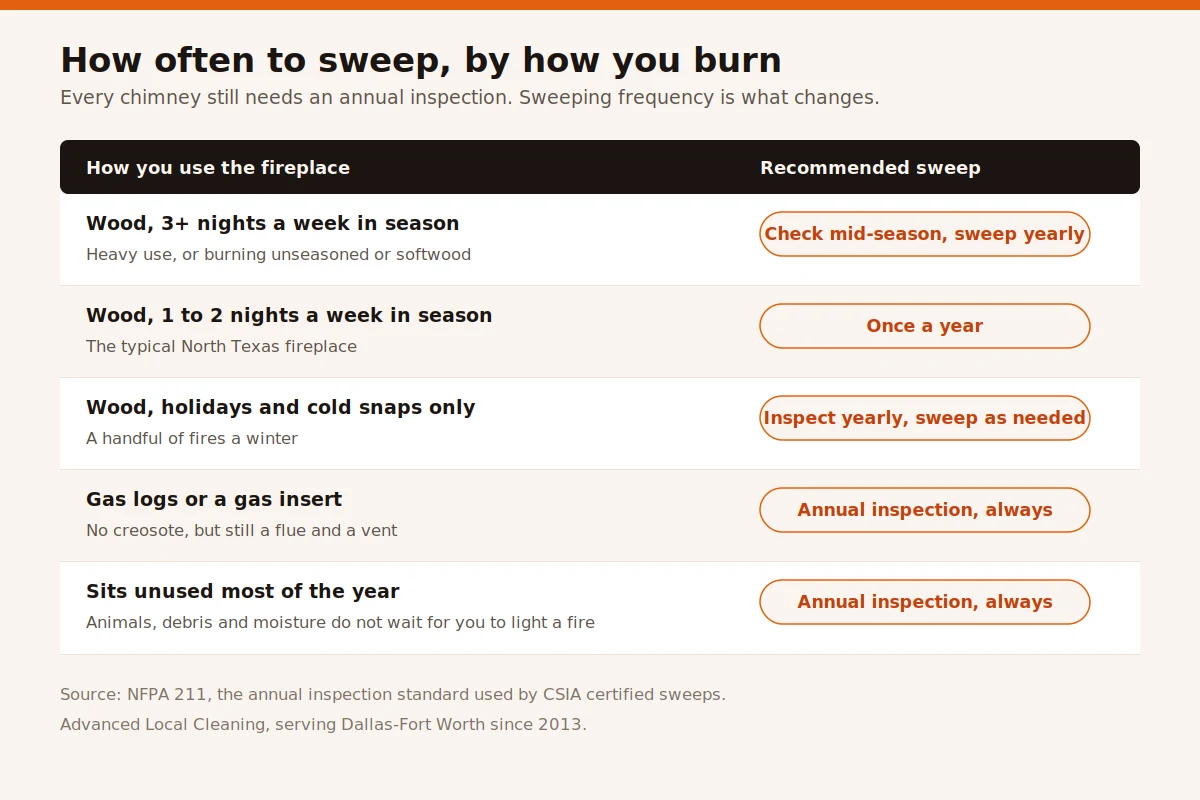
Gas fireplaces still need the same annual check, since they collect their own kind of debris even without creosote. And if your chimney sits unused most of the year, skipping the inspection is the one shortcut that tends to backfire, because animals and moisture do not wait for you to light a fire.
The short answer, by how you burn
There is no single number that fits every fireplace, but there is a reliable starting point: get it looked at every year, and let how you actually use it decide whether a sweep happens every year or every couple of years.
Why "once a year" is not the same for every household
Four things decide where you actually land, and none of them are guesswork once someone has looked at your setup.
- How many nights you burn. A fireplace lit three or four nights a week through December and January builds creosote a lot faster than one lit for Thanksgiving and a couple of cold snaps.
- What you burn. Seasoned hardwood, oak or ash that has dried for six months to a year, burns hot and mostly clean. Green wood, or a softwood like pine or cedar, burns cooler and throws off more of the unburned particles that condense into creosote on the way up the flue.
- Open fireplace versus a stove or insert. A wood stove or insert is designed to choke the burn down so the fire lasts longer, and that lower, slower burn runs a cooler flue. Cooler flue gas means more creosote condenses before it escapes, so stove owners often need a sweep on a tighter schedule than an open fireplace burning the same amount of wood.
- How well the flue drafts. A flue that is undersized for the firebox, or one on the shaded north side of the house that never really warms up, runs colder and collects buildup faster. If you are not sure what kind of chimney you have or how its flue is built, our guide to telling a prefab chimney from a masonry one covers what to look for.
The eighth inch rule
NFPA 211 is the standard a CSIA certified sweep is actually working from, and it comes down to a measurement rather than a feeling. A dull, paper thin layer of soot is normal and safe to keep burning past. Once that layer reaches about an eighth of an inch, thick enough to see clearly on the flue wall with a flashlight, it is time to schedule a cleaning. Past a quarter inch, glazed, cracked or flaking, the fireplace should not be used again until it is cleaned, because a chimney fire can occur at any point past that.
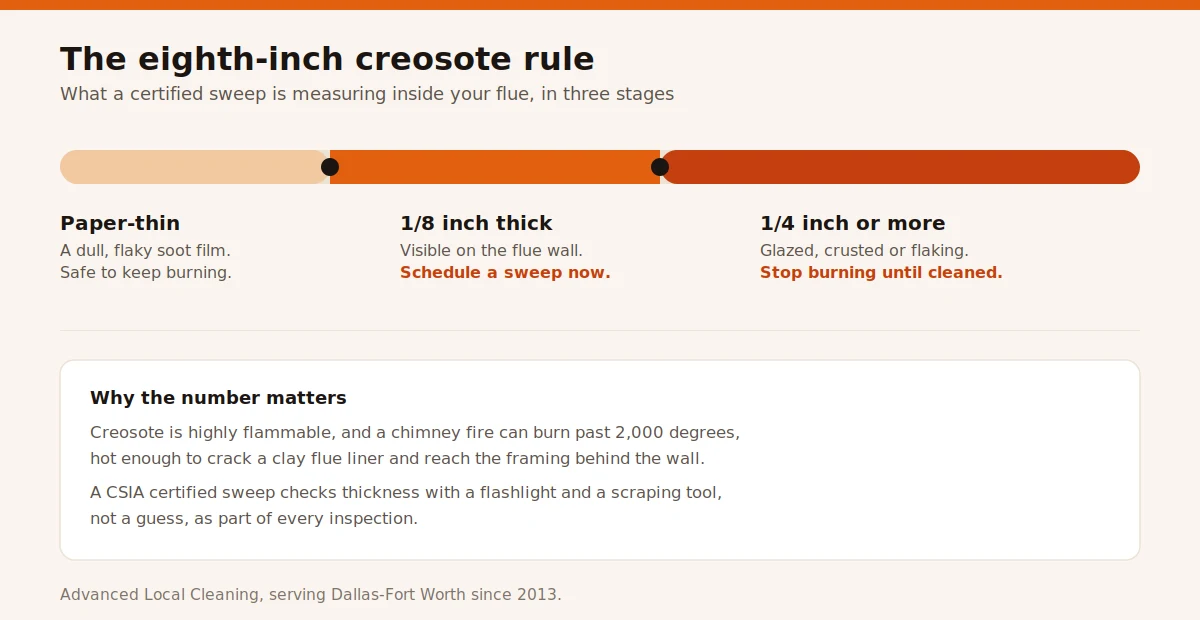
The reason the number matters is the temperature involved. Creosote is one of the most flammable substances that accumulates in an ordinary home, and a chimney fire fed by it can burn past 2,000 degrees, hot enough to crack a clay flue liner and reach the wood framing behind it. That is also why a real inspection includes a physical check of thickness with a flashlight and a scraping tool rather than a guess from the driveway.
"We barely use ours" is not a reason to skip it
This is the one that catches people. A chimney that sits idle for most of the year is not accumulating creosote, so it feels safe to leave alone, but it is exposed to everything else. Birds and squirrels see an open flue as a ready-made nest site, and a nest blocking the flue is one of the more common causes of smoke backing into the house the first time a homeowner lights a fire in November. Rain and humidity work on the damper and the metal parts of a prefab flue whether or not you burn a single log. Spiderwebs, leaves and general debris settle into the smoke chamber over a season or two and narrow the path smoke needs to take out of the house.
None of that shows up from the living room. The only way to know a flue is clear before the first fire of the season is to have someone look at it, which is exactly what an annual inspection is for, used or not.
Gas fireplaces need the same annual look
Gas gets treated as maintenance free because it does not produce creosote, and that part is true. What gets missed is that gas fireplaces collect their own kind of debris. Spiders are drawn to the smell of the gas orifice and will build webs that block it, which is a common reason a gas fireplace will not light on the first try each fall. Ceramic logs erode slightly every time they are used and shed small particles into the burner assembly. Glass panels can develop hairline cracks that are only obvious up close, and the venting itself needs the same clear path a wood chimney does. An annual check catches all of that before it turns into a no-light call in the middle of a cold snap.
Signs it needs cleaning before the calendar says so
A handful of signals mean do not wait for your usual schedule.
- A persistent smoky or campfire smell in the house, especially on humid or rainy days when it is more noticeable
- Smoke that rolls back into the room instead of drawing up the flue, or a fire that struggles to catch and stay lit
- Soot or creosote you can see flaking or glazed on the firebox opening or just up inside the flue
- Scratching, chirping or rustling sounds from the chimney, which usually means an animal got further in than the cap
- A cap that has worked loose or fallen, which is both an entry point for water and an open invitation for wildlife
Best time to schedule it in North Texas
Late summer through early fall is the sweet spot. It is before the first real cold snap sends every homeowner in DFW calling at once, and it leaves time for any repair a sweep uncovers, a cracked damper, a loose cap, mortar that needs attention, to get done before you actually need the fireplace. Waiting until the week before Thanksgiving usually means a longer wait for an appointment and less runway if something needs fixing first.
What a real inspection actually checks
A proper visit is not just running a brush down the flue. It includes a visual inspection of the firebox, damper and flue, a creosote thickness check against the eighth inch standard, a look at the cap and crown or chase cover from the roof, and photos of the flue before and after so you can see what came out. We run a sweep with an included inspection starting at $99, done by CSIA and NFI certified technicians, and it typically takes about an hour with HEPA no-mess cleanup so nothing ends up on the carpet. You can see the full scope on our chimney sweep and cleaning page.
If an inspection turns up buildup past the eighth inch mark, or a flue that has not been touched in several seasons, that is a heavier job than a routine sweep. Our creosote removal page covers how we handle stage two and stage three buildup and what drives the difference in price.
Not sure when yours was last swept? Start with the inspection.
We check the flue, measure the creosote and tell you honestly whether it needs a sweep this year or can wait. CSIA and NFI certified, based in Plano, serving DFW since 2013.
Common questions about chimney cleaning frequency
How do I know if my chimney actually needs cleaning?
The reliable way is a flashlight check of the flue wall for creosote thickness, which is what a CSIA certified sweep does as part of an inspection. At home, warning signs include a smoky smell that is stronger when it is humid or raining, smoke that drifts back into the room instead of drawing up the flue, and visible black buildup around the firebox opening. Any of those means it is worth having someone look before the next fire.
Does a gas fireplace need a chimney sweep?
It needs an annual inspection even though it will rarely need a true sweep, since gas does not produce creosote. What it does collect is spiderwebs in the gas orifice, small particles shed from ceramic logs, and the occasional venting issue, all of which an annual check catches before they cause a no-light call in cold weather.
What happens if I just do not clean it?
Creosote keeps building with every fire, and past about a quarter inch the fireplace should not be used until it is cleaned because a chimney fire becomes a real possibility. Beyond fire risk, an unclean or uninspected flue can also mean poor draft, smoke coming back into the house, and a blocked or damaged flue you do not find out about until the first cold night of the year.
Can I check the creosote thickness myself?
You can get a rough idea with a flashlight held up into the firebox opening, looking for a dark, dull coating versus a thicker, flaking or glazed layer. What you cannot easily do from the ground is see the full length of the flue or judge thickness accurately the way a scraping tool does, which is why an annual professional check is still worth it even if you inspect casually yourself between visits.
How long does a sweep and inspection take?
A standard visit runs about an hour for a typical single flue chimney, covering the sweep itself, a visual inspection of the firebox, damper and flue, and a check of the cap and crown or chase cover. It runs longer if the technician finds something that needs a closer look, like a cracked crown or a flue that has not been serviced in several years.