
How to Put Out a Chimney Fire
What to do in the first minute, why water and extinguishers do not work on a fire inside the flue, and the inspection that has to happen before the next one.
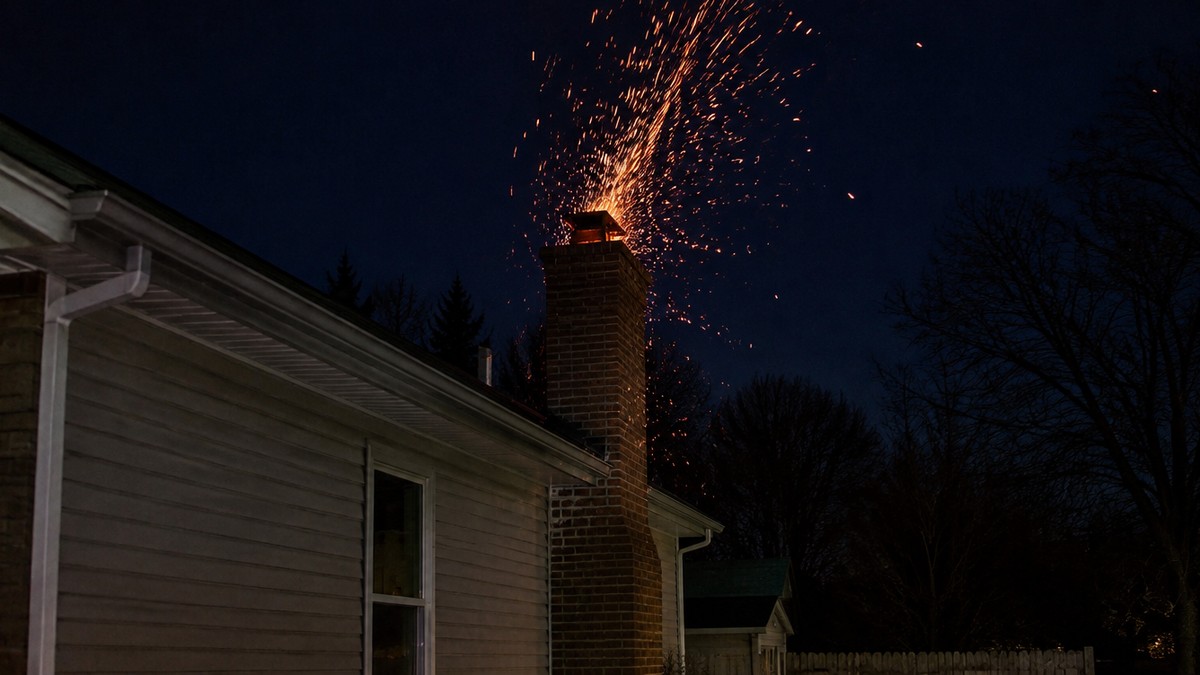
If a chimney fire is happening right now, get everyone out of the house and call 911 immediately, then stay out until firefighters confirm it is safe to go back in. A fire burning inside the flue is not something a homeowner can put out from the fireplace: water poured into a hot chimney can crack a clay tile liner or flash into dangerous steam, and a fire extinguisher aimed into the firebox cannot reach flames traveling through the masonry behind your walls. Firefighters have the training and equipment to attack the fire safely and to check whether it has spread into the attic or roof framing. Once the fire is confirmed out, the chimney needs a full camera inspection before it is used again, since a chimney fire can crack liners and warp dampers in ways that do not show from the living room.
If you think a chimney fire is happening right now
A chimney fire usually announces itself with a loud roaring or cracking sound that people often compare to a low-flying plane or a freight train, along with dense smoke and sometimes visible flames or sparks shooting from the top of the chimney. Some burn quietly instead and are harder to catch in the moment, which is covered in more depth in our guide to what causes a chimney fire and how to tell if you already had one. Either way, if you suspect one is happening, the order of operations is the same.
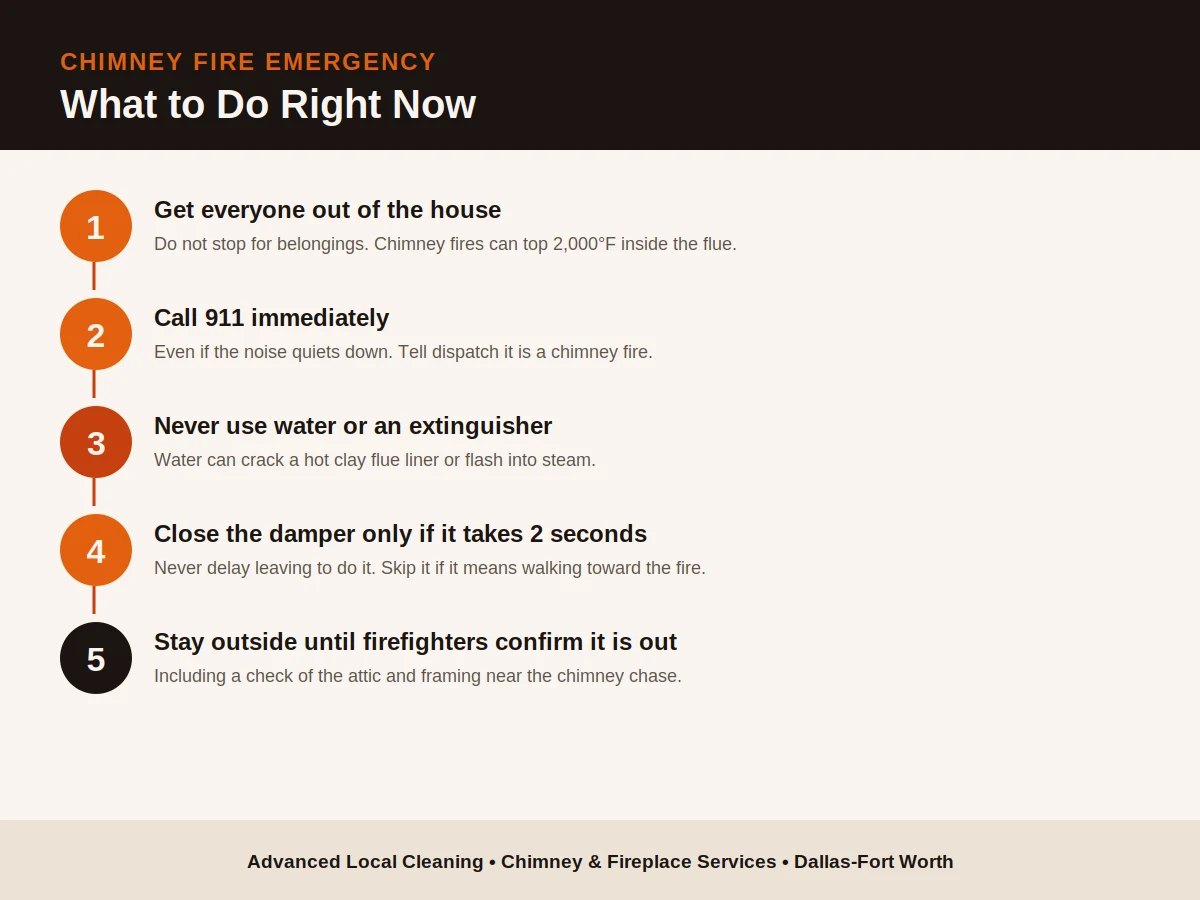
- Get everyone out of the house. Do not stop to gather belongings or investigate the sound further. Chimney fires can reach temperatures well over 2,000 degrees Fahrenheit inside the flue, hot enough to ignite nearby framing if the masonry or liner has any hidden crack.
- Call 911 the moment you are out, even if the noise seems to be dying down. A chimney fire that has gone quiet has not necessarily gone out. Tell the dispatcher it is a chimney fire specifically, since that changes how the response is handled.
- Do not try to put it out yourself. Do not throw water into the firebox or down the chimney from the roof, and do not aim a fire extinguisher up the flue. Water on a hot clay liner can crack the tile from the temperature shock, and a household extinguisher is not built to reach a fire that is burning inside the chimney structure itself rather than in the firebox.
- Close the damper or fireplace doors only if you can do it in the two seconds it takes on your way out the door. Cutting off airflow can slow the fire, but it is not worth a delay. If reaching it means walking toward the fireplace or spending extra time in the room, skip it and get out.
- Stay outside and let the fire department confirm it is fully out, including a check of the attic and the framing around the chimney chase, before anyone goes back in or touches the fireplace again.
Why you cannot fight a chimney fire the way you would a normal fireplace flare-up
There is a real difference between a fire that is too big in the firebox and a fire that has moved into the chimney itself. A flare-up in the firebox, embers popping or a log rolled too close to the front, can often be managed by spreading the coals and giving it room to burn down. A chimney fire is different because the fuel is creosote lining the inside of the flue, and once that ignites, the fire is traveling through masonry and liner material that runs up through your walls and roof, out of reach and out of sight.
That is also why household tools do not work here. A fire extinguisher is built to smother a fire you can point it at directly. Water works on ordinary house fires by cooling burning material below its ignition point, but inside a chimney it can do more harm than good: a hot clay tile liner can crack from the sudden temperature change, and water flashing to steam inside a confined flue is its own hazard. None of that is a reason to panic, but it is the reason the standard advice is always the same: get out, call the professionals, and let them handle the part that requires specialized equipment.
What firefighters actually do to put one out
Fire crews generally use one of a few approaches depending on how the fire is behaving. For a fire that is still contained and burning hot, they may attack it from the top with water or a dry chemical agent, sometimes using a chain lowered down the flue to help break up creosote as they go. For a fire that seems more contained, they may work from the fireplace opening instead, using extinguishing agents suited to a confined space, which tends to be easier on the chimney structure. In some cases, once they have confirmed the fire is not spreading beyond the flue, they will monitor it and let it burn itself out under controlled conditions rather than introduce water at all. Which approach they use is their call to make on scene, based on what they see and what type of chimney it is.
After the fire is out: what has to happen before you use the fireplace again
Once firefighters clear the scene, the instinct is to treat the problem as solved. It is not, and this is the part that gets skipped most often. A chimney fire, even one that looked small or burned quietly, can crack flue tiles, warp a damper, and damage a chase cover or crown in ways that are not visible from the firebox or from the ground. Using the fireplace again before that damage is found and addressed is how a contained incident turns into a repeat fire or a slow leak into the framing months later.
A full inspection with a camera scan of the flue, the same standard used any time a chimney fire is suspected, is what actually confirms the condition of the liner from top to bottom. What that inspection is looking for lines up with the same evidence covered in our piece on signs a chimney fire already happened: creosote that looks puffy or honeycombed rather than flat, a warped or discolored damper, cracked or missing flue tiles, a scorched or misshapen cap, and new cracks in the exterior masonry near the roofline.
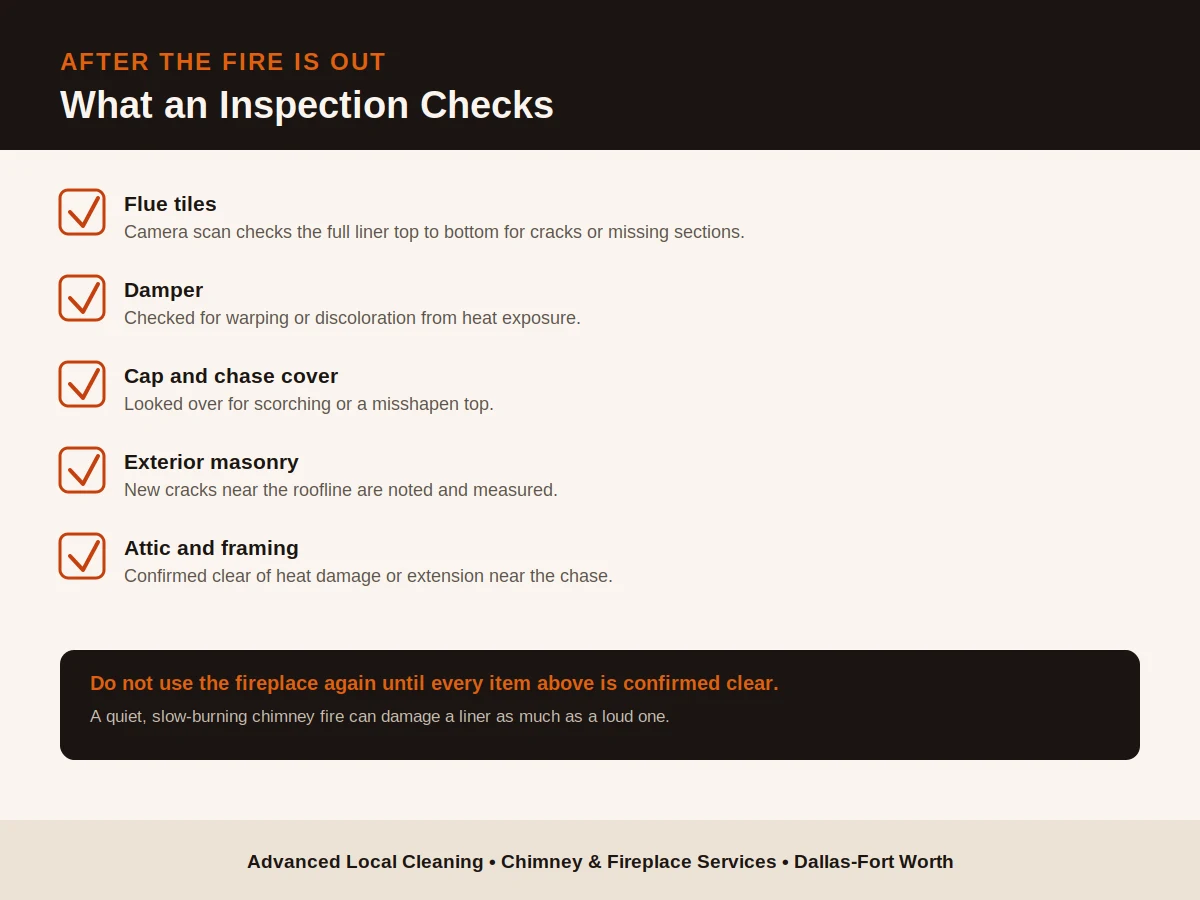
It is also worth a look at the attic and the framing near the chimney chase, even if firefighters already checked it, particularly in the days after if you notice a persistent smoky smell, discoloration on a ceiling or wall near the chimney, or any warmth where there should not be any. If your homeowners policy covers fire damage, this is also the point to start that claim, since documentation from a professional inspection carries more weight than a description after the fact.
What we do when we get the call after a chimney fire
When a homeowner calls us after a suspected chimney fire, we start with a full inspection rather than assuming anything about what happened, using a camera to check the flue from the firebox to the cap. Our sweep and inspection visits start at $99, and if the fire went further than a routine cleaning covers, we walk through exactly what the camera found, in plain terms, before quoting anything. Some fires end in a single cracked crown or a damper that needs replacing. Others mean a section of flue tile or the liner itself needs to come out. Either way, our chimney repair team handles it from the small fix to a full rebuild, and you see the written scope and price before anyone starts work.
Had a chimney fire, or suspect you did?
We inspect the flue, the liner and the damper with a camera and tell you plainly what we find. CSIA and NFI certified, based in Plano, serving DFW since 2013.
Common questions about putting out a chimney fire
Should I throw water on a chimney fire?
No. Water poured into the firebox or down the chimney from the roof can crack a hot clay flue liner from the sudden temperature change, and it can flash into dangerous steam inside a confined space. Get everyone out and call 911 instead of trying to extinguish it yourself.
Will closing the damper put out a chimney fire?
Cutting off airflow can slow a chimney fire, but only close the damper or fireplace doors if it takes no more than a couple of seconds on your way out the door. Never delay leaving the house to do it, and never go back inside to try.
Can a chimney fire spread to the rest of my house?
Yes. Heat from a chimney fire can travel into the attic or roof framing through a cracked liner or damaged masonry, which is why firefighters check those areas before clearing the scene, and why any lingering smoky smell or warmth afterward is worth a follow-up look.
The fire seemed small. Do I still need an inspection?
Yes. Quiet, slow-burning chimney fires can do as much damage to a liner and damper as the loud, dramatic kind, without the obvious warning signs. A camera inspection is the only reliable way to confirm the flue was not cracked or warped before you use the fireplace again.
How do I know if what I am hearing is a chimney fire?
A loud roaring or cracking sound, often compared to a low-flying plane or a freight train, along with dense smoke or visible flames and sparks from the top of the chimney, are the classic signs. If you hear or see any of that, treat it as a chimney fire and get out.