
Gas Fireplace Maintenance: What It Needs and How Often
What an annual service visit actually covers, how often DFW homes really need one, and what it costs when nothing is broken yet.
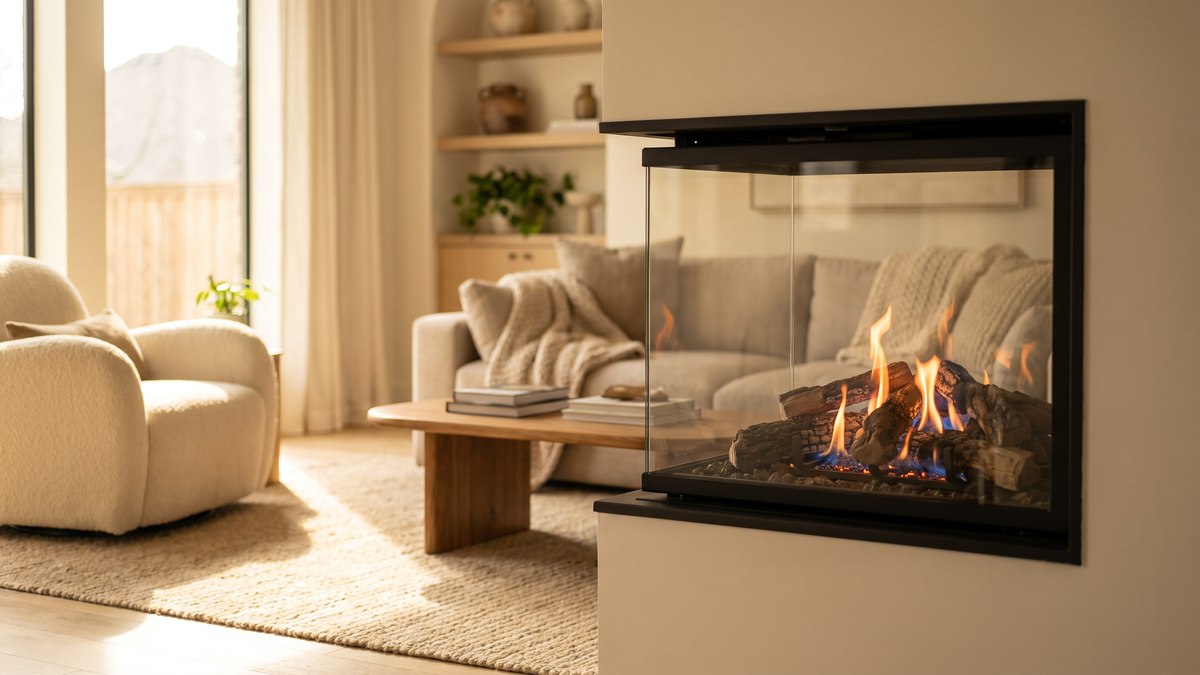
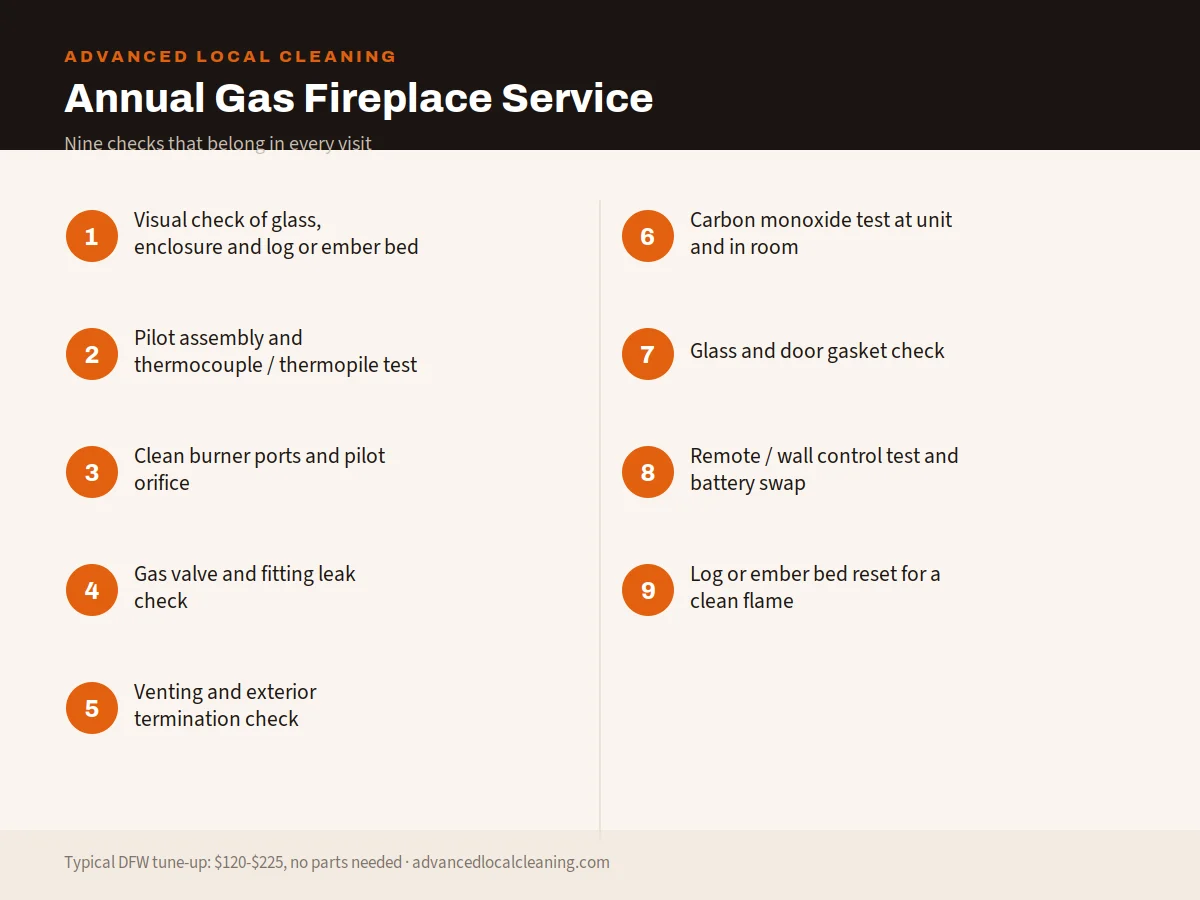
A gas fireplace needs a full service once a year if you run it most winter evenings, or every other year if you only light it a handful of times a season. The visit itself checks the pilot assembly and thermocouple, cleans the burner ports and pilot orifice, tests the gas valve and fittings for leaks, checks the vent termination and takes a carbon monoxide reading, and resets the log or ember bed so the flame pattern looks right and burns clean instead of sooty.
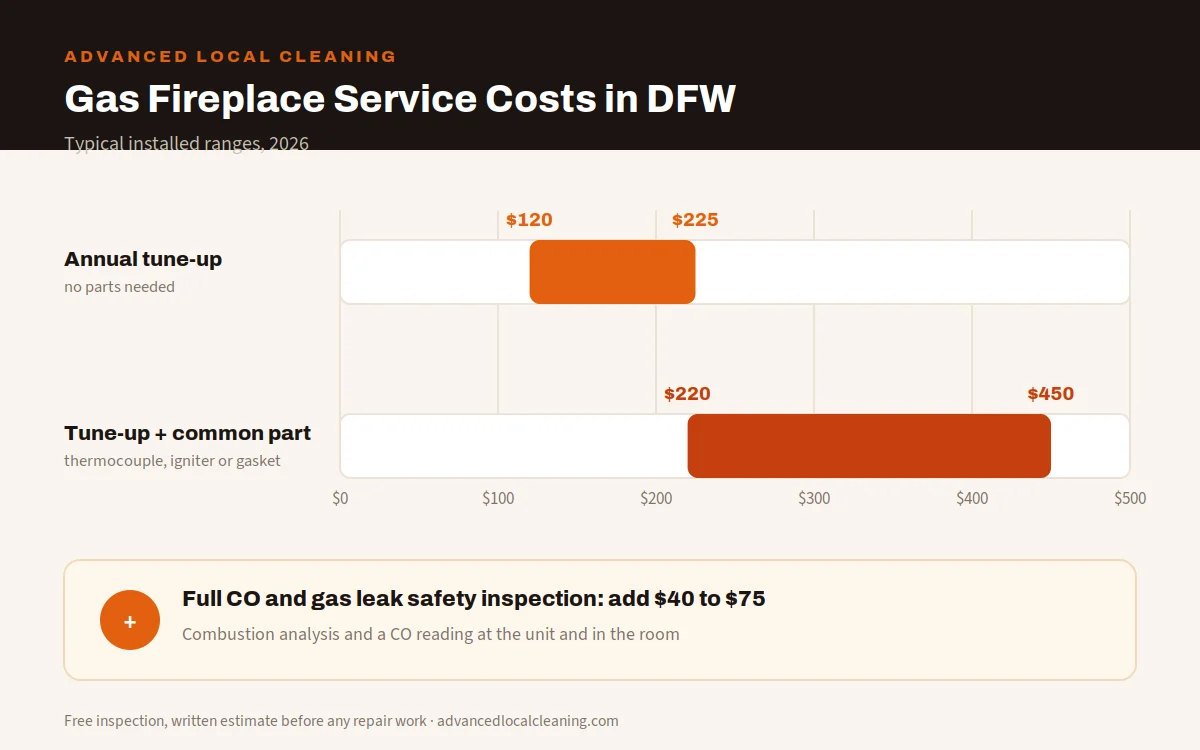
A standard DFW tune-up with no parts needed runs about $120 to $225, more if a thermocouple, igniter or gasket has to be replaced. The two things that push a North Texas fireplace off a clean yearly schedule are heavy spring pollen pulled into the intake and spiders that move into the pilot assembly during the long unlit summer.
What's actually in an annual gas fireplace service
"Cleaning" undersells it. A proper service visit is closer to a small inspection with a cleaning built in, and most of it is checking things that fail quietly rather than things you can see from the couch.
- Visual check of the glass, enclosure, logs or embers, and surrounding trim for cracks, discoloration or gaps
- Pilot and thermocouple or thermopile test. These are what keep gas flowing to the pilot and shut it off if the flame goes out. They wear on a timeline, not on how often you use the fireplace
- Cleaning the burner ports and pilot orifice of dust, lint and, in North Texas especially, spider webs and egg sacs, which are a genuinely common cause of a pilot that won't stay lit
- Gas valve and fitting leak check with a soap solution or a combustible gas detector at every connection the technician can reach
- Venting check. On a direct-vent unit that means the exterior termination cap is clear of nests, leaves and debris. On a vented log set it means the flue above it is drawing properly
- Carbon monoxide test at the unit and in the room, ideally with a combustion analyzer rather than just a household CO alarm
- Glass and door gasket check for cracks in the glass and wear in the seal that keeps the firebox sealed from the room
- Remote or wall control test, including battery replacement on standing pilot and battery backup systems
- Log or ember bed reset. Logs shift over a season of use and reassembly, and a log out of position is one of the most common reasons an otherwise healthy burner throws a yellow, sooty flame instead of a clean blue one
How often your fireplace actually needs it
Once a year is the right answer for a fireplace that gets lit most evenings through a North Texas winter, which is shorter than most of the country's but still adds up to real hours on the unit between November and February.
Every other year is defensible for a fireplace that gets lit occasionally, more decoration than heat source. It is not defensible indefinitely. A pilot orifice does not know how many times you have used the fireplace this year, and neither does a rubber gasket or a thermocouple losing its calibration.
A few things move a fireplace back onto the annual schedule regardless of how lightly it gets used:
- Propane units. Propane burns a little dirtier than natural gas and tends to leave more residue in the burner over a season
- Homes near new construction or a recent renovation. Drywall dust and sawdust find their way into intake grilles and settle on the burner faster than normal household dust
- Ventless or vent-free units. These rely on an oxygen depletion sensor as the main safety system, and that sensor should be tested every year, not every other
- The first year in a new home, or the first year you own a fireplace with no service history you can verify
What North Texas adds to the checklist
A gas fireplace in Minnesota and one in Plano fail for different reasons, mostly because of what happens to it during the seven or eight months a year nobody lights it.
The biggest one is spiders. North Texas has a long warm season and a healthy spider population, and a dark, slightly warm pilot orifice sitting unused from April through October is an attractive place for one to build a web or lay an egg sac. Technicians in the gas hearth trade have a name for it, "spider syndrome," and it is one of the most common reasons a fireplace that worked fine last winter won't hold a pilot flame this one.
Spring brings a second issue. Oak and cedar pollen counts in North Texas run high enough to coat outdoor surfaces visibly, and a direct-vent fireplace pulls combustion air through an intake that sits right in that pollen fall. Some of it ends up on the burner.
A fair share of the units we service are in newer construction across Frisco, McKinney, Prosper and west Plano, where a gas insert or log set installed during a build can pick up drywall dust in its first heating season before anyone has thought to have it checked. And a long, humid Texas summer shutdown can let condensation collect inside the venting of a high-efficiency direct-vent system, which a fall service catches before the first cold snap.
What it costs in DFW
These are typical ranges for the metroplex, not a national average. National data lands in a similar place: Angi puts a standard inspection at $100 to $200 and routine cleaning at $75 to $200, with Texas markets like Houston running toward the lower end of that band. DFW sits in the middle.
| Service | Typical DFW price | What it includes |
|---|---|---|
| Annual tune-up, no parts needed | $120 to $225 | Everything in the checklist above |
| Tune-up plus a common part | $220 to $450 | Tune-up plus a thermocouple, igniter or door gasket |
| Full CO and gas leak safety inspection | Add $40 to $75 | Combustion analysis and CO reading at the unit and in the room |
Bigger repairs, a full burner rebuild or a gas line issue, are priced individually once a technician has actually seen the unit rather than estimated blind. Inspections are free and estimates are written before anything beyond diagnosis happens.
Tasks you can do between visits
None of this replaces the annual visit, but it keeps a fireplace running clean in between and helps you catch a problem early.
- Clean the glass only when it is fully cool, using a cleaner made for fireplace glass rather than a household glass cleaner, which can streak or haze on the residue that builds up on hot glass
- Look at the door gasket for gaps, fraying or a section pulling away from the frame
- Replace remote or wall control batteries once a year, at the start of the season
- Keep the area around the unit clear of dust, rugs and drapery, especially near the intake grille on a direct-vent model
- Watch the flame. A clean gas flame is mostly blue with soft yellow tips. A flame that runs mostly yellow or orange and is leaving soot on the glass or logs means something needs attention before the next use
- Never caulk, block or cover an intake or exhaust vent, even to stop a draft
When it's not maintenance anymore
A few signs mean the fireplace has moved past what a routine service fixes and into repair territory.
- The pilot won't stay lit after more than one or two relight attempts
- A persistent gas smell. Turn the fireplace off, ventilate the room and call immediately. Do not attempt to relight it or troubleshoot it yourself
- A popping, rumbling or delayed "whoomp" sound when it lights
- Glass that fogs or stains on the inside again shortly after being cleaned
- Soot building up on the glass or logs between services, faster than it used to
Any of those is a job for gas fireplace repair rather than a routine tune-up, and we treat a reported gas smell as a same-priority safety visit.
What to ask before you book
You do not need to know gas appliances to ask these, and the answers tell you what you are actually paying for.
- Is a CO test included in the price, or is it extra?
- Is the quote for the tune-up alone, or does it assume a part will need replacing?
- Is the technician certified for gas hearth appliances specifically, not just chimneys?
- What happens if a leak turns up mid-visit?
- Does the check include the exterior vent termination, or just the inside of the unit?
One thing worth knowing about masonry gas setups
Not every gas fireplace in DFW is a sealed direct-vent box. A lot of homes run a vented gas log set inside an existing masonry fireplace, and that setup still has a real chimney above it collecting soot and needing its own look, separate from the burner service. If that describes your setup, our chimney sweep and cleaning service covers the flue side of it.
Whichever kind you have, the same annual pattern applies across everything we service. You can see the full range of what we do on our chimney services page, or book the gas fireplace visit directly below.
Pilot acting up, or just due for the annual check?
We'll look at it for free, tell you straight what it needs, and quote the work in writing before anything beyond diagnosis happens. Based in Plano, working across DFW since 2013.
Common questions about gas fireplace maintenance
Does a gas fireplace with a masonry chimney need a sweep too?
Yes, if it is a vented log set burning inside an existing masonry fireplace rather than a sealed direct-vent box. The chimney above it still collects soot and needs the same kind of check as a wood-burning flue, separate from the burner service itself.
Can I skip service if I barely use the fireplace?
Not indefinitely. Pilot orifices clog and spiders move in whether or not the unit ever runs, and rubber gaskets and thermocouples age on a calendar, not a usage counter. Every other year is the outer limit for a lightly used unit.
Is it safe to run a gas fireplace without annual service?
The main risk is not the visible flame, it is incomplete combustion producing carbon monoxide without an obvious sign, especially if a vent termination is partly blocked. A yearly CO check is inexpensive insurance against that.
What is the difference between a tune-up and a full inspection?
A tune-up cleans and tests what is already there. A full inspection adds a combustion analysis and a CO reading at the unit and in the room, plus a check of the exterior vent termination. Worth doing every year even if you space out the tune-up itself.
Why does my glass keep fogging up after I clean it?
A one-time haze on a new fireplace is normal, it is manufacturing residue burning off. Fogging that comes back after every cleaning usually means the flame is not burning clean, which is a service call rather than a glass problem.