
What Causes a Chimney Fire and How to Tell If You Have Had One
What actually starts a chimney fire, why the quiet kind does the most damage, and the evidence checklist for finding out if yours already had one.
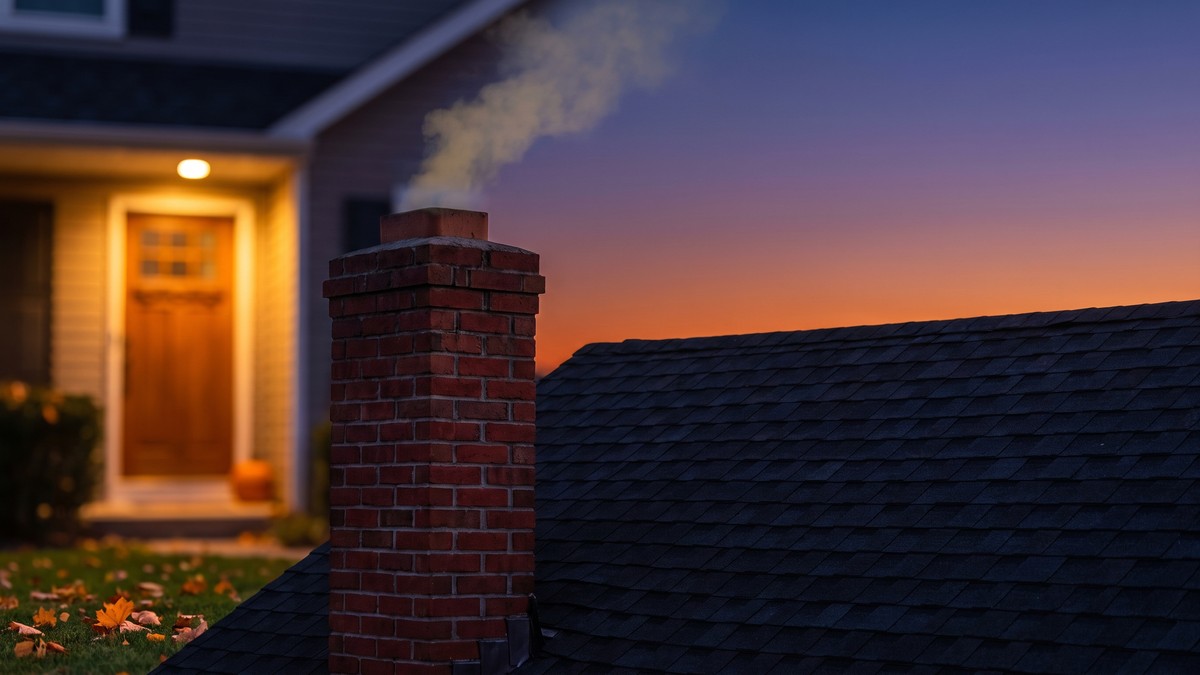
Most chimney fires start when creosote, the tar-like residue wood smoke leaves inside the flue, builds past about an eighth of an inch and ignites from the heat of a normal fire. Unseasoned wood, a blocked or narrowed flue, and a damaged liner all speed up how fast that buildup happens. Not every chimney fire announces itself with roaring flames and a shower of sparks, either. Many burn slow and quiet inside the flue, doing real damage without anyone in the house noticing at the time.
The clearest evidence afterward includes creosote that looks puffy or honeycombed rather than flat and dull, a warped damper or connector pipe, cracked flue tiles, and a scorched or misshapen cap. If any of that turns up, stop using the fireplace and get it inspected before the next fire, since a chimney fire will not simply burn itself out.
What actually starts a chimney fire
Every wood fire sends smoke up the flue carrying tar and gas that never fully burned. As that smoke hits the cooler upper chimney, it condenses on the walls as creosote, a dark, sticky residue that builds up one layer at a time. On its own, a thin layer is normal. The trouble starts when it keeps accumulating and eventually ignites from the heat of an ordinary fire, and creosote is one of the most flammable substances that collects in an average home.
Four things tend to be behind it, and they usually show up together rather than alone.
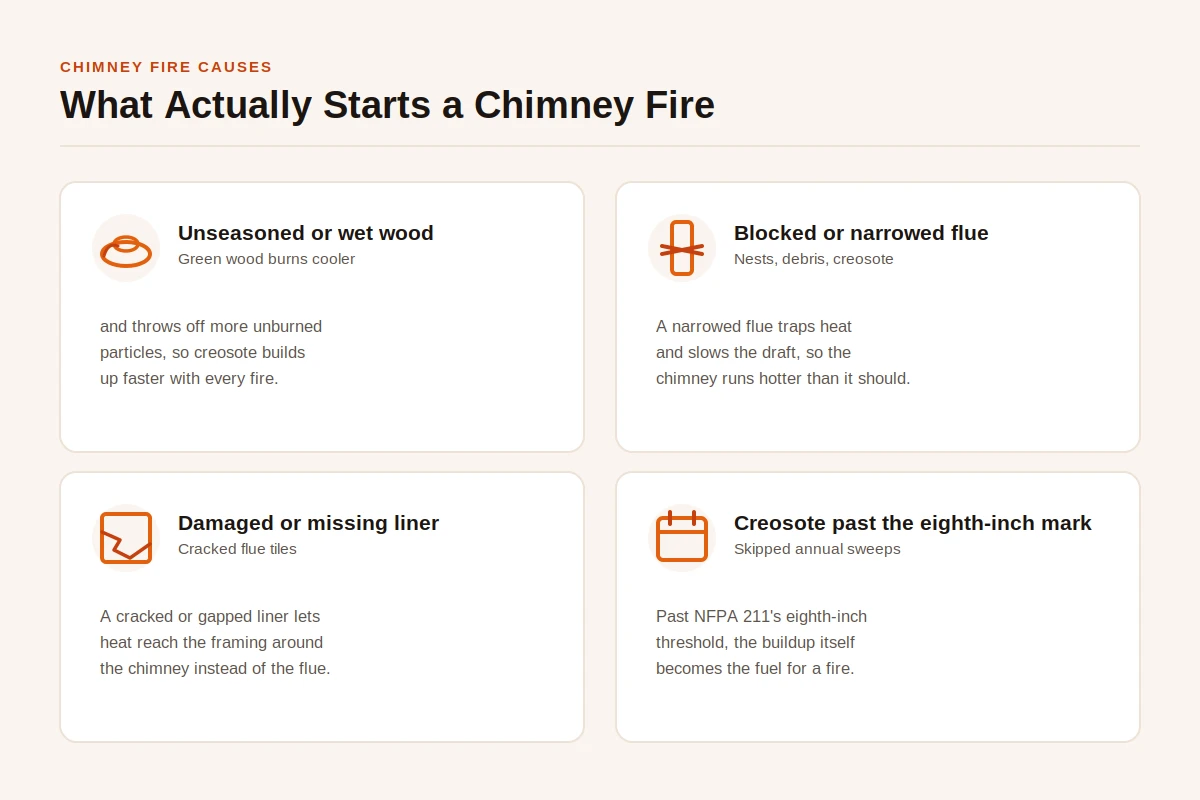
- Unseasoned or wet wood. Green wood burns cooler and throws off more of the unburned particles that turn into creosote. Seasoned hardwood that has dried for six months to a year burns hotter and cleaner, and leaves far less behind.
- A blocked or narrowed flue. A bird nest, leaves, or a heavy layer of old creosote itself can restrict how the chimney drafts. A narrower path traps more heat inside the flue, which runs the whole system hotter than it was built to run.
- A damaged or missing liner. Cracked flue tiles or a liner with gaps let heat reach the framing and masonry around the chimney instead of staying contained inside the flue, which is exactly what the liner is there to prevent.
- Creosote that was never removed. Once buildup passes about an eighth of an inch, the standard a CSIA certified sweep works from under NFPA 211, the deposit itself becomes fuel. Past a quarter inch and glazed, that risk is no longer theoretical.
Why this shows up differently in North Texas homes
DFW does not get the long, steady heating season that colder climates do, and that actually works against a lot of local fireplaces. Instead of a daily fire that keeps the flue consistently warm, most North Texas households burn in bursts: several nights in a row during a cold snap, then nothing for weeks. Each cold start burns cooler until the flue warms up, and that stop-and-start pattern condenses more creosote per fire than a steady daily burn would in a colder region.
The chimney type matters too. Newer subdivisions across Frisco, McKinney, Allen and Prosper lean heavily on prefab, factory-built chimneys, while older neighborhoods in Dallas, Plano and Fort Worth are more likely to have full masonry chimneys. The two are inspected differently and fail differently, so if you are not sure which one you have, our guide to telling a prefab chimney from a masonry one covers what to look for before you call anyone out.
Two different chimney fires, and the quiet one is the more common one
Not every chimney fire looks like the ones in a warning video. There are really two kinds, and they do very different amounts of damage in very different ways.
A fast-burning chimney fire is the dramatic one: loud roaring or popping, dense smoke, and sometimes visible flames or sparks shooting from the top of the chimney. It is frightening, and it is also the version most people would notice and call the fire department for.
A slow-burning chimney fire is quieter and often goes completely unnoticed while it happens. It still reaches damaging temperatures inside the flue, but without the noise or visible flames that would tip anyone off. This is the version that does real structural harm to a liner, damper, or chase cover while the household has no idea anything happened, and it is more common than the dramatic kind.
Signs you already had a chimney fire
Because the quiet version leaves no obvious moment to point to, the evidence usually shows up afterward, either from the roof, from inside the firebox, or in how the fireplace behaves the next time it is used.
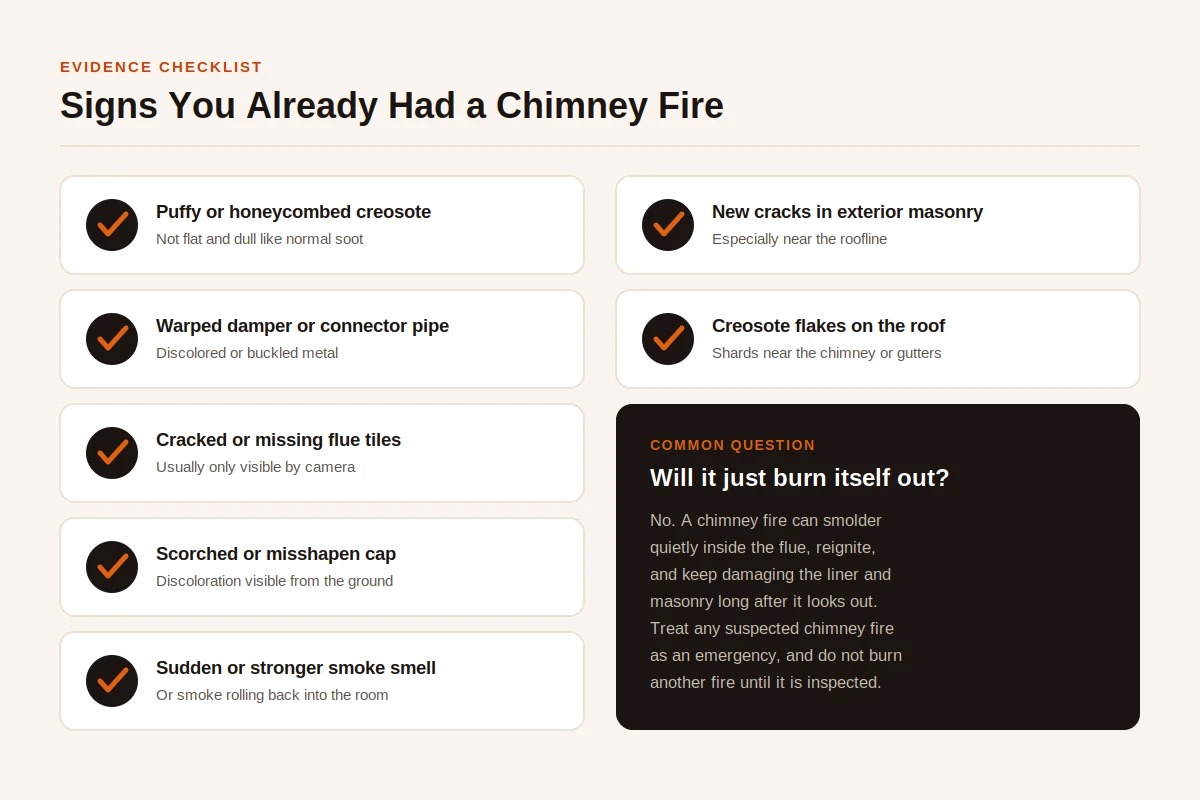
- Creosote that looks puffy or honeycombed instead of the flat, dull soot layer that is normal. Heat from a chimney fire changes the texture, and it is one of the more reliable tells a sweep looks for.
- A warped, buckled, or discolored damper or connector pipe. Metal that has been exposed to chimney-fire temperatures rarely goes back to its original shape.
- Cracked, popped, or missing flue tiles. These usually are not visible without a flashlight or a camera scan, which is why this evidence tends to surface during an inspection rather than a casual look.
- A cap or chase cover that looks scorched, discolored, or misshapen from the ground or in a roof photo.
- New cracks in the exterior masonry, especially near the roofline, that were not there before.
- Creosote shards or flakes on the roof or around the base of the chimney, which can fall out during and after a fire inside the flue.
- A sudden change in how the fireplace performs: a stronger smoky smell than usual, or smoke that starts rolling back into the room when it did not before.
Any one of these on its own is worth a look. More than one together is a reasonable signal that something happened and the chimney has not been checked since.
Will a chimney fire burn itself out?
No, and this is the assumption that causes the most damage. A chimney fire, especially the slow-burning kind, can smolder inside the flue well after it seems to have quieted down, and it can reignite. The heat involved is also enough to crack a clay flue liner and warp metal components, and none of that stops just because the noise or visible flame did. A chimney should not be used again until whatever happened has been fully inspected, regardless of how calm things look afterward.
What to do if you suspect a chimney fire
If a fire is actively happening in the chimney right now, treat it as an emergency: get everyone out and call 911. Do not try to handle an active chimney fire without the fire department, and do not assume it has stopped just because the sound or visible flame has died down.
If you suspect a fire happened at some point in the past, whether from one of the signs above, a strange smell after a fire, or simply not knowing the chimney's history after moving into a home, stop using it and have it inspected before the next fire. A level 2 inspection, which includes a camera scan of the full flue, is the standard way to find tile cracks and liner damage that a visual check from the firebox cannot reach. That is also the right move after buying a home with an existing fireplace, since there is no way to know what the previous owner did or did not deal with.
What that inspection turns into depends on what it finds. The usual path is inspect, diagnose, quote, then repair, and you see the written estimate before anyone touches a brick or replaces a liner. A single cracked crown or a warped damper is often a contained fix. Cracked flue tiles, a liner damaged beyond repair, or masonry that took real heat damage is a bigger job, and it is one worth getting an honest number on rather than guessing.
Why this rarely happens to chimneys that get swept every year
The eighth-inch threshold that turns creosote into fuel is also the number an annual sweep and inspection is built around catching before it gets there. Our creosote removal page covers how we handle buildup that has already passed that mark, from flaky early-stage soot to hardened, glazed deposits. A routine chimney sweep and inspection, which we run starting at $99 with CSIA and NFI certified technicians, is what keeps most chimneys from reaching the point where a fire is even possible. And if an inspection turns up cracked tiles, a warped damper, or masonry damage consistent with heat exposure, our chimney repair team handles everything from a single cracked crown to rebuilding what a fire damaged.
Not sure if your chimney has ever had a fire?
We check the flue, the liner and the damper, and tell you plainly what we find. CSIA and NFI certified, based in Plano, serving DFW since 2013.
Common questions about chimney fires
Will a chimney fire burn itself out?
No. A chimney fire, especially the quiet, slow-burning kind, can keep smoldering inside the flue after it seems to have died down, and it can reignite. The heat involved is enough to crack a clay flue liner and warp metal parts, and none of that stops on its own. Treat any suspected chimney fire as an emergency and have the chimney inspected before it is used again.
How do I know if I had a chimney fire without seeing it happen?
Look for creosote that looks puffy or honeycombed instead of flat soot, a warped or discolored damper, cracked flue tiles, a scorched or misshapen cap, new cracks in the exterior masonry, or creosote shards on the roof. Cracked tiles usually are not visible without a camera scan, which is why an inspection is the reliable way to confirm it either way.
What is the most common cause of chimney fires in North Texas homes?
Creosote buildup past the eighth-inch threshold set by NFPA 211 is the most common underlying cause, usually made worse by burning unseasoned wood or going more than a year between sweeps. A blocked or narrowed flue and a damaged liner both make it worse by trapping more heat inside the chimney.
Can I still use my fireplace after a chimney fire?
Not until it has been fully inspected, ideally with a camera scan of the flue. A chimney fire can crack tiles and damage the liner in ways that are not visible from the firebox, and burning a fire in a chimney with that kind of hidden damage puts the home at real risk.
Does homeowners insurance cover chimney fire damage?
Most homeowners policies cover sudden fire damage, but coverage details, deductibles and whether ongoing creosote neglect affects a claim vary by policy and insurer. Check your specific policy or ask your agent, since this is not something a chimney company can determine for you.