
Why Your Fireplace Smells and What the Smell Tells You
Smoky, musty, rotten or sulfur: what each smell usually means and what to do about it.
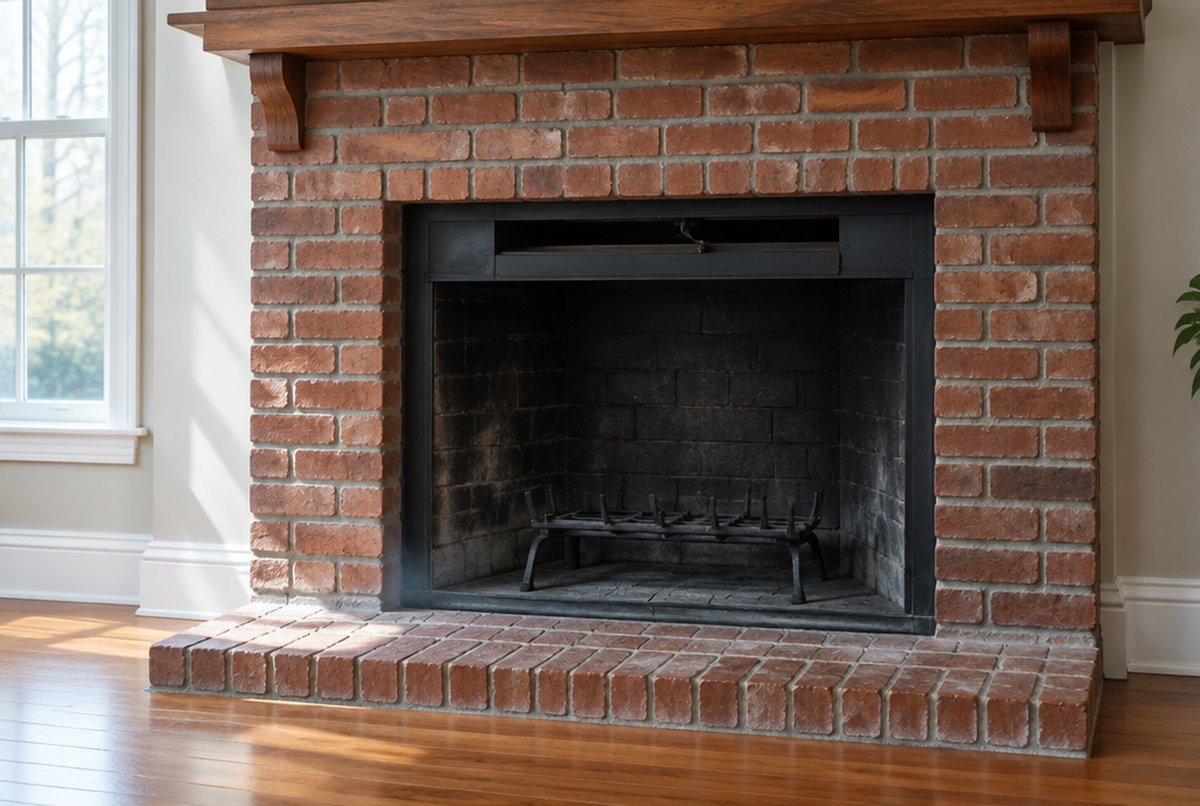
A chimney smell in the house almost always comes from creosote and soot in the flue, and it gets stronger when humid air or a downdraft carries it into the room. A sharp, smoky or tar-like odor points to creosote. A damp, musty one points to water getting in. A rotten or sour smell points to a dead animal or debris, and a sulfur smell near a gas fireplace is a reason to leave and call your gas utility. The fix depends on the smell, so match it to the cause below before you reach for a deodorizer.
Why a fireplace smells even when nobody has lit it
A fireplace that smells in July is not burning anything. What you are smelling is residue left in the flue from past fires, and the air moving through the chimney is carrying it into the house. Creosote, the tar-like film that smoke leaves on flue walls, has a strong smell, and it does not go away between fires. It just stays quiet until something wakes it up, usually moisture or a change in air pressure.
That is why the smell tends to arrive on a particular kind of day instead of all the time. In North Texas that means a muggy afternoon, a spring storm or the first hour the air conditioner runs hard. The sections below sort the common smells by what they usually mean, and how to confirm the cause before spending money.
Match the smell to the cause
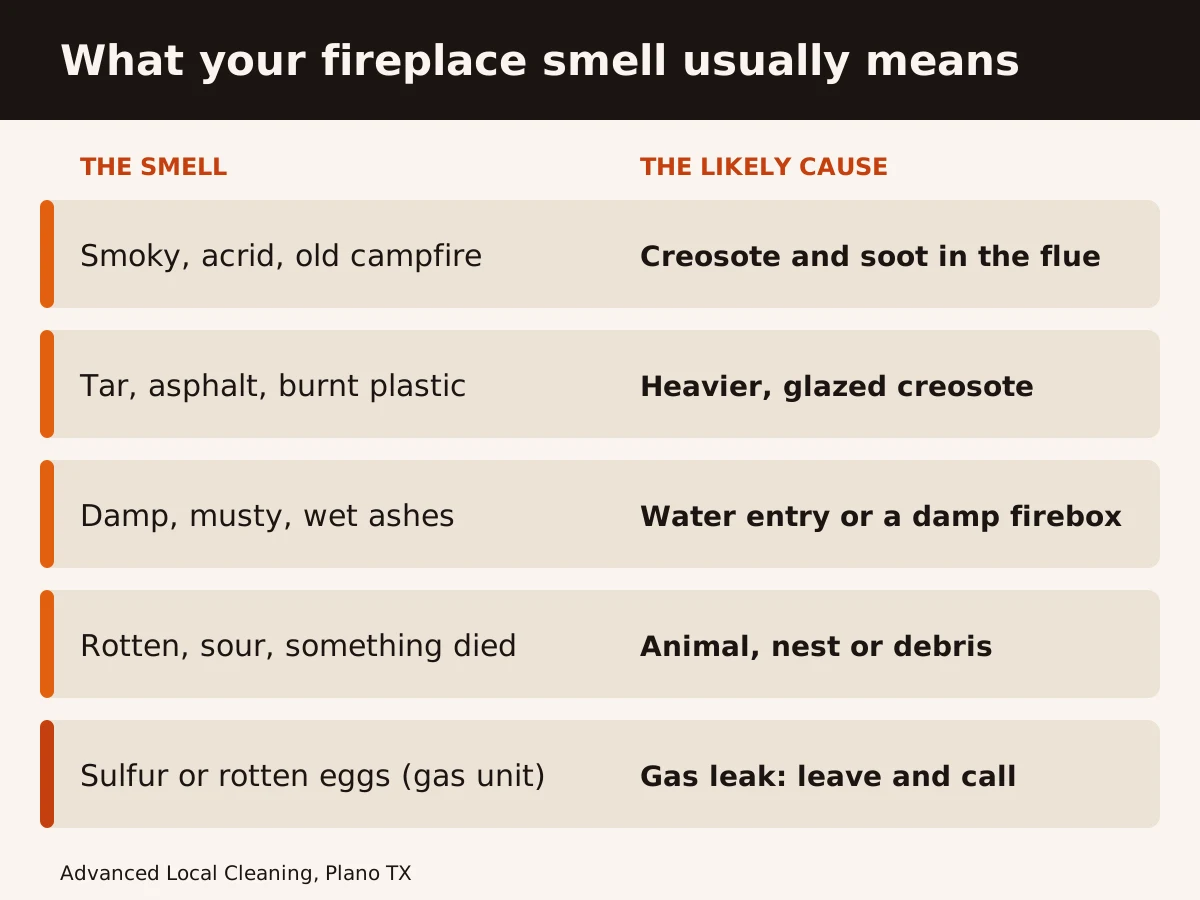
Most people can narrow it down by describing the smell in plain words. This is a starting point, not a diagnosis, but it saves a lot of guessing.
- Smoky, acrid or like an old campfire. This is the classic creosote and soot smell. It builds with every fire and gets worse in humid weather. If your chimney has not been swept in a year or more, this is the first thing to suspect.
- Tar, asphalt or burnt plastic. Heavier, glazed creosote tends to smell like this, especially after a hot day warms the flue. Our guide to the three stages of creosote shows what each stage looks like.
- Damp, musty or like wet ashes. Water is getting in through a missing cap, a cracked crown or failed flashing, or the firebox is holding moisture. Damp ash and soot smell far stronger than dry ash.
- Rotten, sour or like something died. A bird, squirrel, raccoon or its nest, or a pile of leaves and debris on the smoke shelf, is the likely source. This smell is usually strongest on warm days.
- Sulfur or rotten eggs near a gas fireplace. Natural gas has an odorant added so leaks can be noticed. Treat this one as a safety issue, not a cleaning one.
- Fresh dust or a burning smell on the first fire of fall. Dust, pollen and pet hair settle in the firebox over the summer and burn off. A short, mild smell that fades within a few minutes is normal.
Why it gets worse in humid weather and after rain
Creosote and soot hold moisture, and when the air is damp they release more of their odor. Rain makes it worse if water reaches the flue, because wet soot smells far stronger than dry soot. A chimney without a cap, or with a cracked crown, lets rain run straight down the flue and into the firebox. Our guide to the cap, crown and chase cover explains which part keeps the water out.
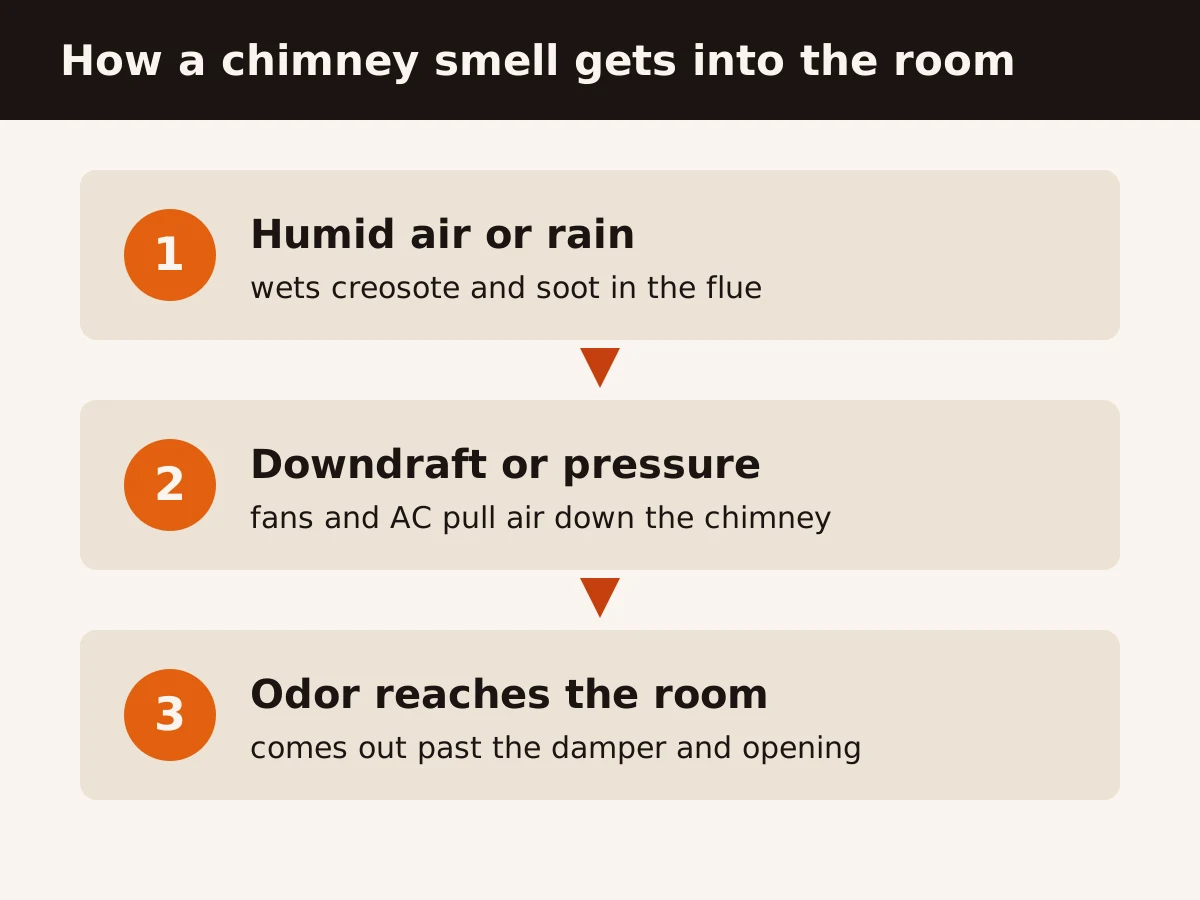
Humidity matters twice in Dallas-Fort Worth. Spring storms and a wet summer bring the moisture, and then the air conditioner pulls cool air through the house. In summer the chimney is often cooler than the room it sits in, so it can pull air down instead of venting it up. Heavy, cool air sinking through the flue carries the smell with it.
Downdraft and pressure: why the smell comes into the room
The smell is not new when it shows up. The air movement is. A kitchen exhaust fan, a bathroom fan, a dryer or a tight, well-sealed house can pull more air out of the home than comes in, and the easiest path for replacement air is often straight down the chimney. That air passes over the creosote on the way and brings the odor with it. Newer, tighter homes in Frisco, McKinney and west Plano are more prone to this than older houses with leakier envelopes.
A quick test: run the exhaust fans and range hood, then stand near the fireplace. If you notice the smell getting stronger or you feel a slight draft of cool air coming out of the firebox, pressure is part of the story. Cracking a window while the fans run usually weakens it. Our explainer on chimney draft goes into why the air moves this way.
When it is something dead or something living in the chimney
A rotten smell that comes and goes with the temperature is the signature of an animal. Chimney swifts, sparrows, squirrels and raccoons all use chimneys, and young or trapped animals sometimes die inside. The smell can last for weeks, and it does not clear with a deodorizer because the source is still in the flue.
Do not light a fire to try to burn it out, and do not try to pull a nest out yourself. Chimney swifts are protected by federal law, and a live or nesting animal needs a careful removal. Our team handles this under chimney animal removal, and we also check what got in so a cap can keep it out next time.
What you can safely try first
A few low-risk steps help you work out whether the smell is simple or serious. None of them requires climbing on the roof or taking anything apart.
- Close the damper fully if it closes. An open flue lets odors rise into the room, and a sealed damper blocks most of them.
- Look inside the firebox with a flashlight. Heavy ash, damp soot, standing water or debris on the damper or smoke shelf tells you a lot.
- Clear out old ash and keep only a thin layer. Wet or old ash smells strongly and holds moisture against the firebox floor.
- Run the exhaust fans, then smell the fireplace, to see whether pressure is driving it.
- Check your cap from the ground with binoculars. A missing or bent cap explains a damp, musty smell quickly.
Be careful about masking the smell. Baking soda in the firebox, scented candles and air fresheners can take the edge off a mild smell, but they do not remove creosote, and a fix that hides the odor can delay finding a real problem such as water damage or a blocked flue.
When the smell means a professional visit
Call a sweep if the smell is smoky or tar-like and it has been a year or more since the last cleaning, if it returns every humid day, or if it is strong enough that you notice it from another room. A level 1 inspection looks at the flue, the damper and the firebox, and it shows whether you need a sweep, a repair or both. For built-up creosote, our creosote removal work breaks down hardened deposits that a routine brush will not shift, and our standard chimney sweep and cleaning covers the lighter cases.
If the cause is water, a sweep alone will not fix it. The cap, crown, flashing or masonry has to be repaired, and the flue dried and checked before the smell stops coming back. Ask for a written estimate and photographs of what the technician found so you can see the source for yourself.
A gas smell is a different problem
If you smell sulfur or rotten eggs near a gas fireplace or gas logs, turn the fireplace off, avoid flames and switches, open windows and leave the house. Call your gas utility or 911 from outside. Do not try to relight the unit. Carbon monoxide has no smell at all, so keep a working alarm on every level and near bedrooms whatever the fireplace smells like.
How to keep the smell from coming back
The lasting fix is a clean flue and a dry one. Have the chimney swept on the schedule that matches how much you burn, which our guide on how often to clean a chimney in North Texas lays out. Keep a cap in place so rain and animals stay out, burn seasoned hardwood so less creosote forms, and close the damper between fires. If you are in a tight, newer home, crack a window when you run several exhaust fans at once.
Chimney or fireplace smell in your house?
We find the source, show you what we see and quote any repair in writing first. Based in Plano, serving DFW since 2013.
Common questions about fireplace and chimney smells
Why does my fireplace smell like smoke when it is not in use?
Creosote and soot stay on the flue walls after a fire and keep giving off odor. Humid air, rain or a downdraft carries that smell into the room, so it comes and goes with the weather.
Why does my fireplace smell worse when it rains?
Moisture makes creosote and soot release more odor, and rain that gets past a missing cap or cracked crown wets the soot even more. A sweep and a cap or crown repair usually stop it.
How do I get rid of a fireplace smell?
Close the damper, clear old ash, and have the flue swept if it has been a year or more. Deodorizers only mask it, so the lasting fix is removing the creosote or stopping the water.
What if my chimney smells like something died?
A rotten smell that grows on warm days usually means an animal or nest in the flue. Do not light a fire. Have it removed by a professional, since chimney swifts are protected by law.
What should I do if I smell gas near my fireplace?
Turn the fireplace off, avoid flames and switches, open windows and leave. Call your gas utility or 911 from outside and do not relight the unit yourself.