
What Happens During a Chimney Sweep, Step by Step
A walk through a real visit, from the first drop cloth to the final photos, and what your report should say.
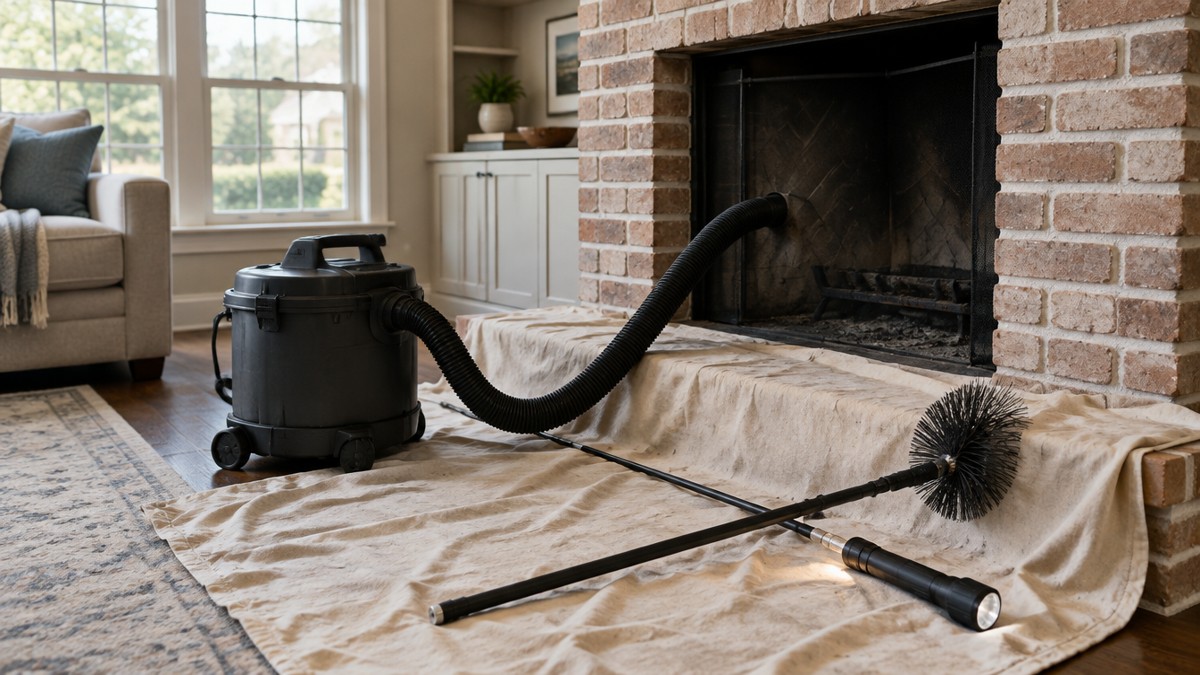
A chimney sweep protects your floors with drop cloths and a HEPA vacuum, looks over the flue and firebox with a light or camera, then scrubs the flue with a rod and brush from the bottom up or the roof down. The loosened soot and creosote get vacuumed out, and the sweep checks the damper, smoke chamber and cap before explaining what was found. Most homes take about an hour. A good visit ends with photos and a plain list of anything that needs repair, so you know the state of the chimney before you light the next fire.
Before the sweep arrives
You do very little. Skip the fire the morning of the visit so the firebox is cold, move rugs and small furniture back from the hearth, and make sure the crew can walk straight to the fireplace. If the chimney exits through the roof and you have a gate or a dog in the yard, mention it when you book. That is the whole list.
The timing is worth a thought in North Texas. Burning season is short here, a few cold months at most, and the first cold front sends everyone to the phone at once. Booking in September or early October gets you a same-week slot. Waiting until the first freeze can mean a longer wait. Our guide on how often to clean a chimney in North Texas covers how much you burn against how often you need a sweep.
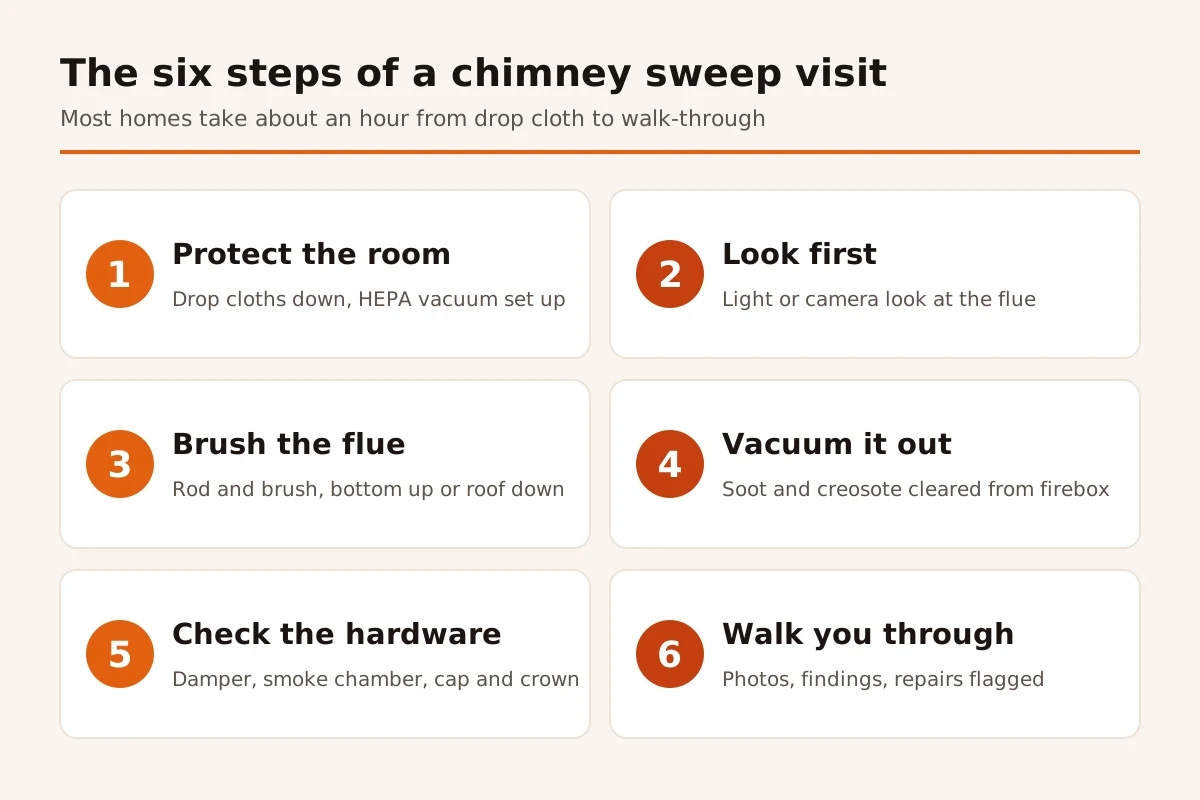
Step 1: Protect the room
Before any brush touches the flue, a careful crew lays drop cloths over the hearth and the floor in front of it and sets up a vacuum with a HEPA filter at the firebox opening. The vacuum pulls air toward the fireplace while the brush works, so the dust goes into the filter instead of drifting into the living room. The technicians wear masks and goggles. If you see no drop cloth and no vacuum, you are about to find out why people dread chimney cleaning.
Step 2: Look before sweeping
The sweep opens the damper and shines a light up the flue, sometimes sending a camera up for a longer look. This first pass shows how much buildup there is and what kind. The Chimney Safety Institute of America (CSIA) says a chimney should be swept when buildup reaches an eighth of an inch or more, and that offsets in the flue can hide problems from a visual check. If the flue turns out to be glazed and shiny instead of dusty and flaky, that is a different job, and it is worth knowing before the work starts. Our guide to the three creosote stages shows what each looks like, and heavy glaze is the territory of creosote removal.
Step 3: Brush the flue
This is the part everyone pictures. A round brush sized to the flue goes on the end of a flexible rod, and the sweep scrubs the walls from the firebox up, or from the roof down when the chimney can be reached that way. More rod sections are added until the brush clears the top. Brushes differ by flue shape: round for most liners, a squarer brush for clay tile, and a different pattern again for stainless liners that a stiff brush could scratch. A wrong-sized brush leaves the corners of the flue untouched, so size matters more than force.
Prefabricated metal chimneys, common in newer DFW homes, get a poly brush instead of a wire one, because wire can damage some metal flue liners. If you are not sure which kind you have, our guide to telling prefab from masonry helps, and the sweep should know within a minute of looking.
Step 4: Vacuum it out
What the brush loosens falls into the firebox and onto the smoke shelf, the ledge behind the damper where debris collects. The sweep vacuums the firebox, the smoke shelf and the damper area until they are clear, then wipes down the hearth. A sweep who sweeps the flue and then just leaves the pile for you to deal with has done half the job.
Step 5: Check the parts you can reach
With the flue clear, the sweep can see it properly. This is where a sweep earns more than the cleaning. The visit usually works as a basic inspection, and CSIA describes the routine check as covering the readily accessible parts of the system:
- The damper should open fully, close, and move freely, with no rust or missing pieces.
- The firebox should have no loose mortar or cracked firebrick, and no staining above the opening that suggests smoke has been spilling into the room.
- The smoke chamber walls should be smooth, and the flue liner should show no cracked or offset tiles.
- The cap and any spark arrestor should be intact, free of rust and blockage, and the crown around them should not be cracked.
If you are unsure what a cap, crown and chase cover each do, our guide to chimney caps, crowns and chase covers sorts them out. The crew will also look for a bird nest or other animal activity at the top, which is a common find after a quiet summer.
Step 6: The walk-through
This step separates a sweep from a person with a brush. Before leaving, the technician should show you what they found, ideally with photos taken before and after, answer your questions, and tell you whether the chimney is ready for use. Our crews photograph the flue before and after so you can see what came out. The point is that you should leave the visit knowing the actual condition of the chimney, not just that it got cleaner.
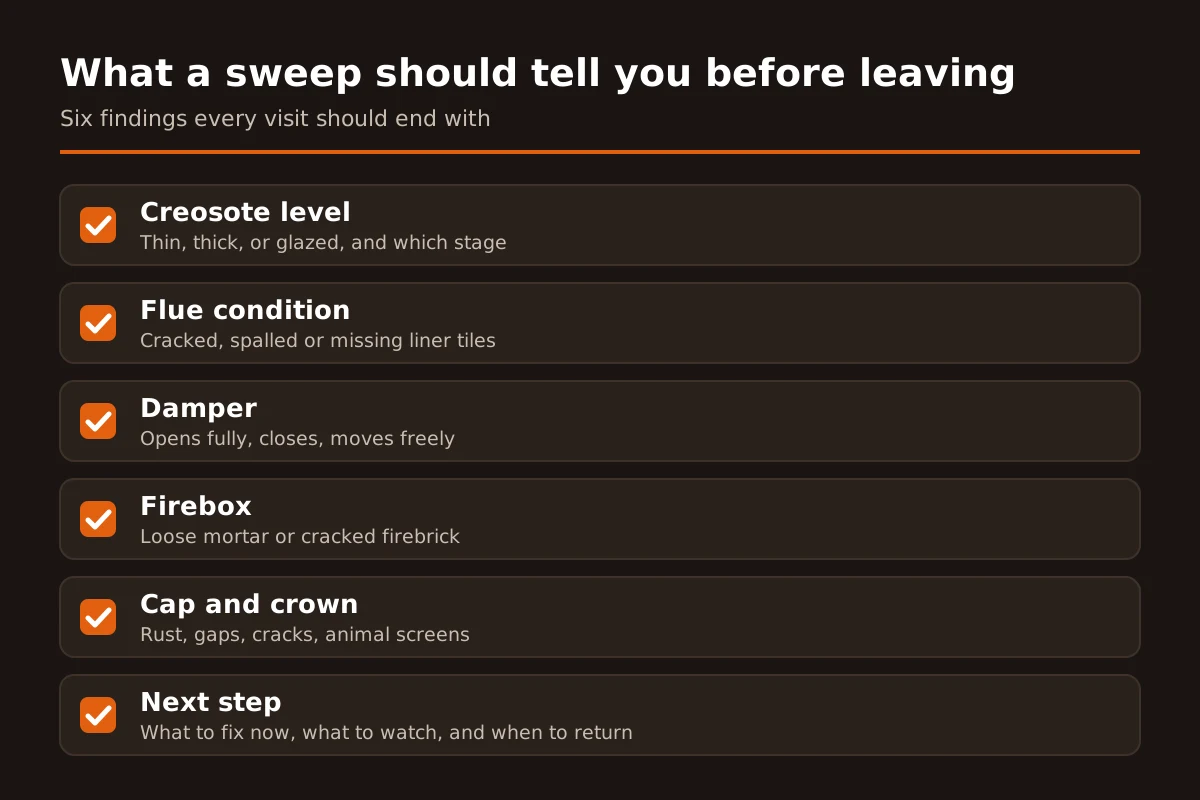
What the report should say
You do not need a thick document. You need clear answers on the six points above: how much creosote there was and what stage it looked like, whether the flue liner is intact, how the damper and firebox look, what shape the cap and crown are in, and what to do next. The last item matters most. A useful report separates three things: repairs to make before you burn again, items to watch and recheck next year, and everything that is fine. A report that lists a pile of repairs with no priorities is a sales sheet, not a report.
If the sweep finds something outside the scope of a cleaning, such as a cracked crown or failed flashing, a straight answer sounds like this: here is the problem, here is a photo, here is what it costs to fix, and here is whether it can wait. You decide. That kind of finding is also why a sweep is worth the money even when the chimney looks clean.
How long it takes and what it costs
Most homes take about an hour from drop cloth to walk-through. A tall chimney, a flue with offsets, heavy glazed buildup, or a bird nest at the top can stretch that. Pricing depends on the chimney, so a firm number should come before work begins. Our chimney sweep and cleaning service starts at $99 and includes a free inspection, and we confirm the price before we start so there are no surprises on the invoice.
Signs the visit is not going well
Most bad sweeps are easy to spot in the first ten minutes. Watch for no drop cloth or vacuum, a sweep who never opens the damper or shines a light up the flue, a crew that never looks at the cap, and a visit that ends without a word about what was found. A cleaning price far below everyone else often means the inspection was skipped. If you want to compare companies, our guide on choosing a chimney sweep and what CSIA certification means lists what to ask. And if you were wondering whether you could do this yourself, we cover that in what DIY chimney cleaning actually gets you.
Book a sweep before the first cold front
We lay down drop cloths, run a HEPA vacuum, sweep the whole flue, check the damper, smoke chamber and cap, and show you photos before we leave. Based in Plano, working across DFW since 2013.
Common questions about a chimney sweep visit
What does a chimney sweep do?
A sweep protects the room, inspects the flue, brushes out soot and creosote, vacuums the firebox, checks the damper, smoke chamber and cap, and explains what was found. The goal is a clean flue and a clear picture of the chimney condition.
How long does a chimney sweep take?
Most homes take about an hour. Tall chimneys, flues with offsets, heavy glazed creosote, or an animal nest at the top can add time.
Will a chimney sweep make a mess in my house?
A careful crew should not. Drop cloths cover the hearth and floor and a HEPA vacuum pulls dust toward the firebox during the brushing. If a company skips both, ask why before they start.
Do I need to be home during a sweep?
Someone should be there to give access and to hear the walk-through at the end. The walk-through is the most useful part of the visit, so it is worth being present for it.
How do I prepare for a chimney sweep?
Skip the fire that morning so the firebox is cold, clear furniture and rugs back from the hearth, and make sure the crew has a clear path to the fireplace and the roof access.