
Chimney Cap, Crown or Chase Cover: What Is What
Three different parts near the top of your chimney, three different jobs, and what each one costs to fix in North Texas.
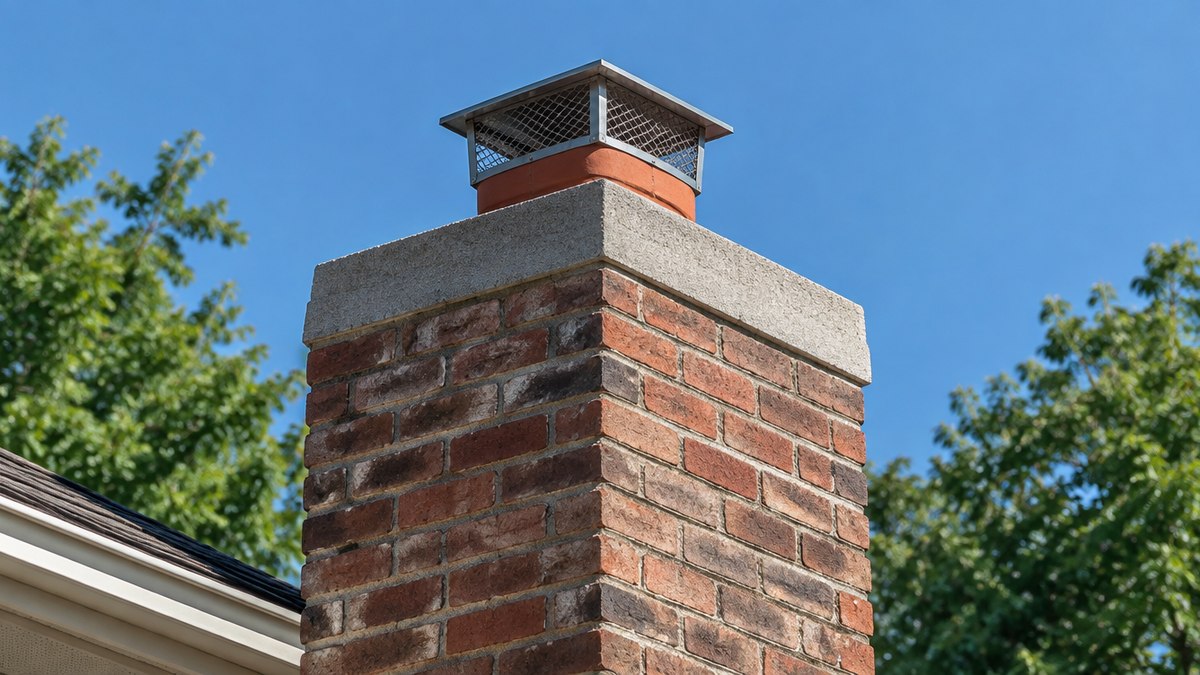
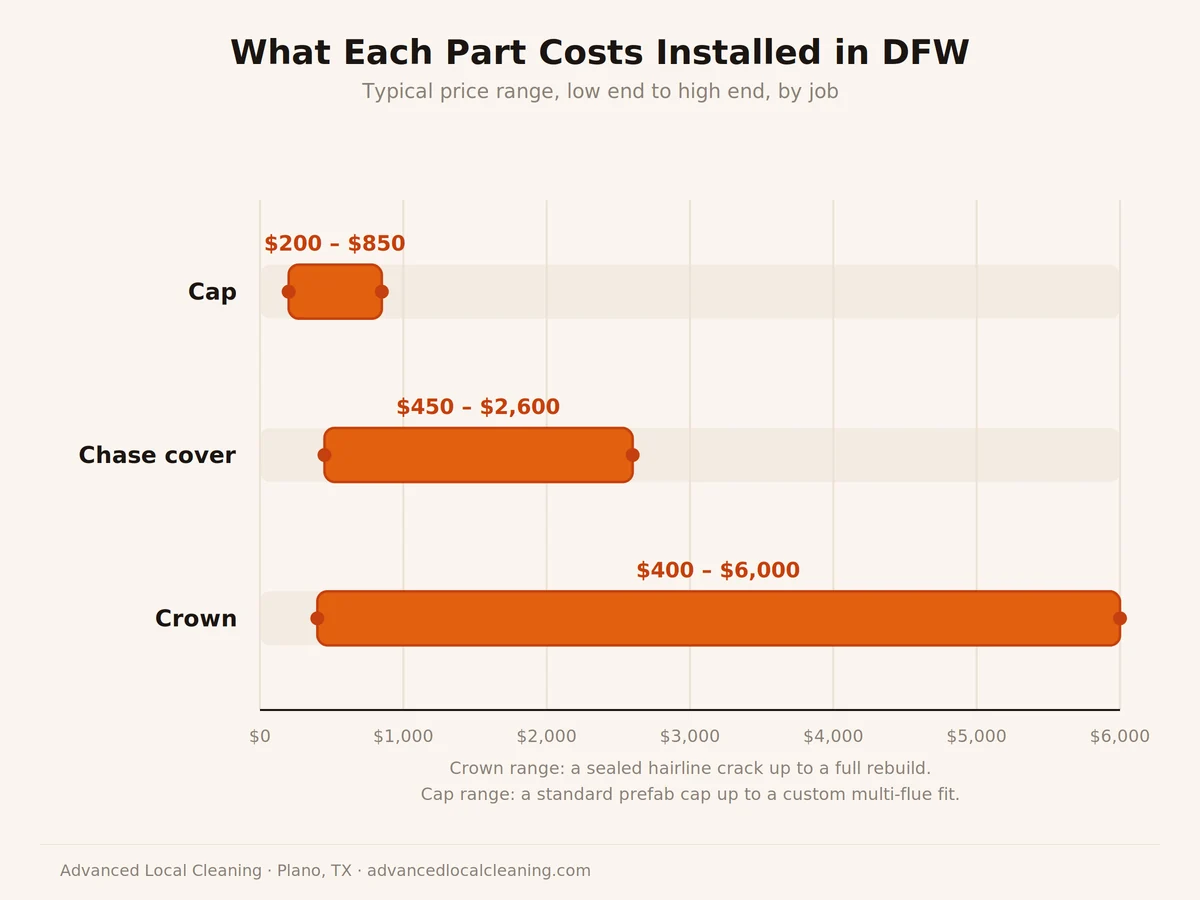
A chimney crown is the poured concrete slab that caps a masonry chimney and sheds rain away from the brick underneath it. A chimney cap is the small mesh-sided hood that sits directly over the flue opening, keeping rain, sparks and animals out of the flue itself. A chase cover is the large flat metal pan that covers the whole top of a prefabricated, wood-framed chimney chase, and it only exists on prefab systems, never on masonry ones. All three sit near the same spot at the top of a chimney, which is why homeowners mix them up, but they are different parts, made of different materials, doing different jobs. In North Texas, crown repair on a masonry stack runs $400 to $6,000 depending on damage, a cap installed runs roughly $200 to $850, and a chase cover replacement runs $450 to $2,600 depending on material.
Why these three get confused
A homeowner calls about a leaking chimney and asks for a "new cap," but the technician gets on the roof and finds a hairline crack running across the crown instead. Someone else searches for chimney crown replacement cost for a prefab chimney that has no crown at all, because prefabs do not build one. The confusion is understandable. All three parts sit within a foot or two of each other at the top of the chimney, and none of them get much attention until one fails. But they are different components, built from different materials, covering different chimney types, and asking for the wrong one gets you the wrong quote before anyone has even looked at the roof.
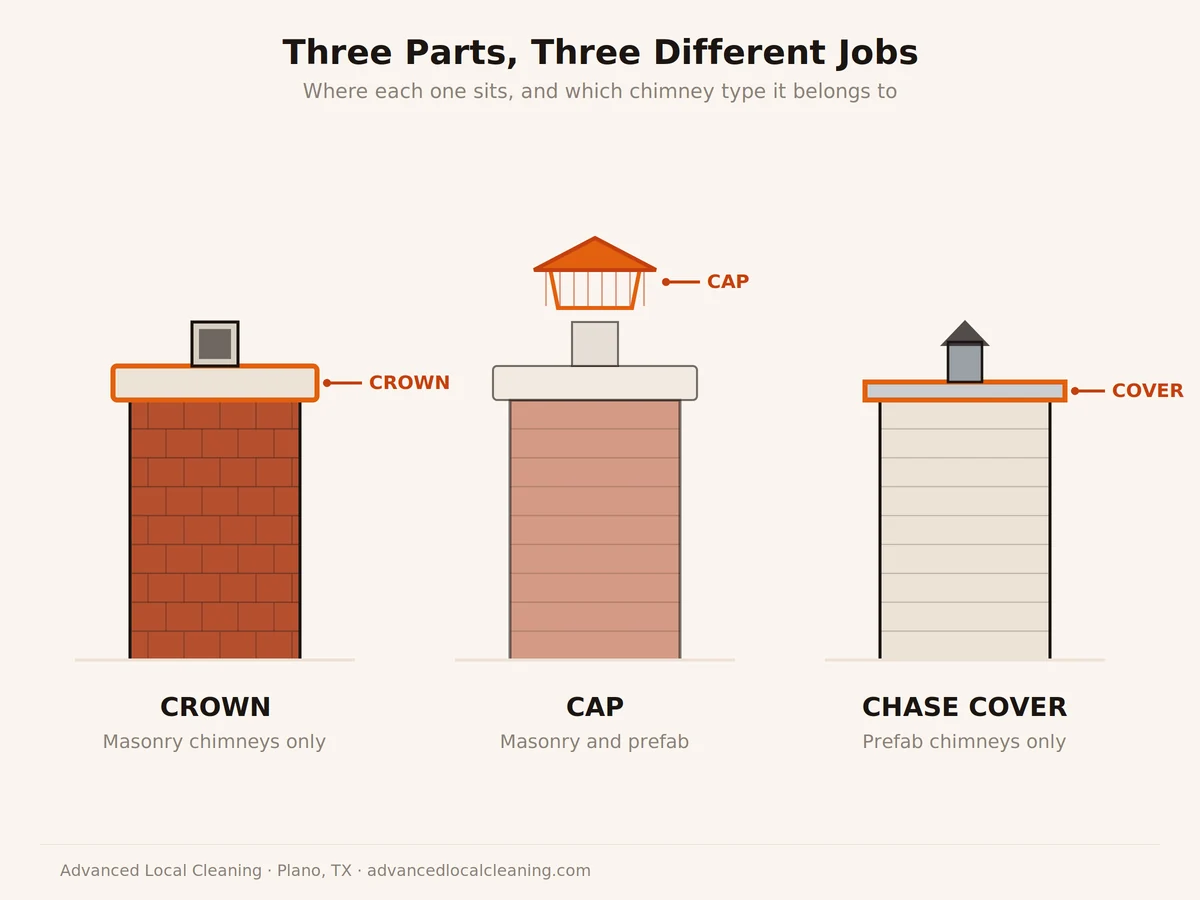
The chimney crown: the masonry chimney's roof
The crown is the poured concrete slab that sits directly on top of a masonry chimney's brick and mortar, wrapping around the clay flue tile that pokes through the middle of it. It exists only on masonry chimneys, brick or stone built up from the foundation, never on a prefabricated one. A properly built crown is sloped so rain runs off the edges instead of pooling, and it is the single biggest thing standing between your chimney's brickwork and North Texas weather.
Crowns fail slowly. Summer UV and the freeze-thaw swings that hit DFW through the winter open hairline cracks in the concrete over years, not overnight. Once water gets into one of those cracks, it works into the brick and mortar below, and the damage compounds: mortar joints erode, brick faces start to spall, and what started as a crack you could barely see becomes a masonry problem that reaches well below the crown itself. Sealing a minor crack early is a modest job. Left long enough, the same chimney needs a full crown rebuild.
On our own jobs across DFW, sealing or patching a hairline crack typically starts around $400. A full rebuild, removing the deteriorated crown and pouring a new one, runs up toward $6,000 depending on the chimney's size and how much masonry damage the delay caused underneath. That gap is the whole argument for catching a crown crack early rather than waiting for a leak to show up in the firebox. Our chimney crown repair team handles both ends of that range, from a same-visit seal to a full rebuild.
The chimney cap: the flue's screen door
The cap is the small hood, usually stainless mesh on the sides with a solid top, that sits directly over the opening of the flue pipe itself, not the whole top of the chimney. Where the crown and the chase cover each cover the full width of the chimney or chase, a cap covers one flue opening at a time, so a chimney with two or three flues needs a cap on each one, or a single multi-flue cap sized to cover all of them at once.
A cap belongs on every working chimney, masonry or prefab, because it is doing a job the crown and the chase cover cannot. It keeps rain from running straight down the flue, blocks sparks and embers from landing on the roof, and stops birds, squirrels and raccoons from treating an open flue as a way into your attic. A chimney without one, or with one that has rusted through or blown off in a storm, is exposed in a way that neither a good crown nor a good chase cover fixes.
National pricing data from HomeGuide puts an installed stainless cap at roughly $200 to $850, with a standard prefabricated cap landing around $475 to $600 installed and a custom-fitted cap running $650 to $800. Where your job falls in that range depends mostly on how many flues need covering and whether the cap has to be custom-built for an odd-shaped or oversized opening. Our chimney cap installation team measures the actual flue before quoting, since a cap that does not seat tight is the one that blows off in the next spring storm.
The chase cover: the prefab chimney's lid
The chase cover only exists on prefabricated, factory-built chimneys. Where a masonry chimney is brick all the way up, a prefab chimney is a wood-framed enclosure, the "chase," clad in siding or a thin brick veneer, with a metal flue pipe running up through the middle of it. The chase cover is the large flat metal pan that seals the entire top of that framed box, distinct from the small cap that sits on the pipe poking up through the cover's center.
Most prefab chases built across the northern DFW suburbs through the 2000s left the factory with a galvanized steel cover, the cheapest option that met code at the time. Galvanized steel protects itself with a zinc coating, and that coating gives out under North Texas sun, hail and standing water faster than most homeowners expect, typically somewhere in the fifteen to twenty year range. Once rust opens a seam, water runs down into a hollow timber box rather than solid brick, which is why a failed chase cover tends to escalate faster and more expensively than a cracked crown left the same amount of time.
Installed pricing across DFW runs $450 to $700 for galvanized steel, $750 to $1,300 for 24 gauge stainless, and $1,400 to $2,600 for copper, chosen mainly for how it looks rather than how it performs. We cover the material tradeoffs and what moves your price inside that range in our chase cover replacement cost guide, and our chimney chase tops page covers how we fabricate and fit a replacement.
Figure out which one you actually have
You do not need to climb a ladder to know which part applies to your chimney. Walk to the end of the driveway and look at the last two feet of it. Brick or stone all the way to the top, finishing in a flat poured slab with a clay flue tile sticking up through it, is masonry, and the part up there is a crown. Siding, stucco or thin brick veneer finishing in a flat sheet of metal is a prefab chase, and that flat sheet is the cover. Either way, if you can see a small round or square hood on top of the pipe coming through, that is the cap, and it belongs there regardless of which of the other two you have. Our guide to telling a prefab from a masonry chimney walks through the rest of the checks if the roofline makes this one hard to see from the ground.
| Part | Chimney type | What it does | Typical installed cost in DFW |
|---|---|---|---|
| Crown | Masonry only | Sheds water off the brick top | $400 to $6,000 (seal to full rebuild) |
| Cap | Masonry and prefab | Screens each flue opening | $200 to $850 |
| Chase cover | Prefab only | Seals the whole chase top | $450 to $2,600 (material dependent) |
When more than one needs attention at once
These parts do not always fail on their own schedule. A chase cover that has rusted through has usually been leaking around the cap seated in it for a while too, since both have taken the same years of weather. A crown that has been cracked long enough to let water in repeatedly can also mean the flashing where the chimney meets the roof deserves a look, since both are doing the same basic job of keeping water out of the same structure. That is the real reason a proper inspection looks at the crown or cover and the cap together rather than quoting one in isolation. It also tends to save on labor, since a technician already on the roof for one repair can address a second one in the same visit instead of a separate appointment later.
Not sure which part is actually failing on your chimney?
We will get on the roof, tell you plainly whether it is the crown, the cap, the chase cover, or more than one, and put the price in writing before anyone touches anything. Based in Plano, working across DFW since 2013.
Common questions about chimney crowns, caps and chase covers
Can a masonry chimney have a chase cover?
No. Chase covers only exist on prefabricated, wood-framed chimneys. A masonry chimney has a crown instead, a poured concrete slab, and the two parts are neither interchangeable nor priced the same way.
Do I need a cap if my chimney already has a crown or chase cover?
Yes. A cap does a different job than either one. The crown and the chase cover seal the top of the structure around the flue, while the cap sits on the flue opening itself and keeps rain, sparks and animals from going straight down it. Every working chimney needs whichever one of the other two matches its type, plus a cap.
How long do these parts typically last?
A masonry crown usually holds up fifteen to thirty years before cracks start letting water in. A galvanized chase cover runs fifteen to twenty years before it rusts through at the seams, while stainless holds up thirty years and beyond. A quality cap can last well over a decade, though it is often the first thing to work loose in a bad storm.
Is a cracked chimney crown an emergency?
Not usually the moment you spot it, but it is not something to leave for a season either. A hairline crack lets water in gradually, and the brick and mortar underneath keep absorbing that damage every time it rains until the crack gets sealed.
Should I replace my chase cover and cap at the same time?
Often, yes. The pan and the cap sitting in it have usually been exposed to the same years of weather, and they tend to corrode on close to the same timetable, so replacing both in one visit is common rather than the exception.