
Can You Clean Your Own Chimney? What DIY Actually Gets You
A rod and brush handle the easy buildup. Here is what they miss, and when it is worth calling someone certified instead.
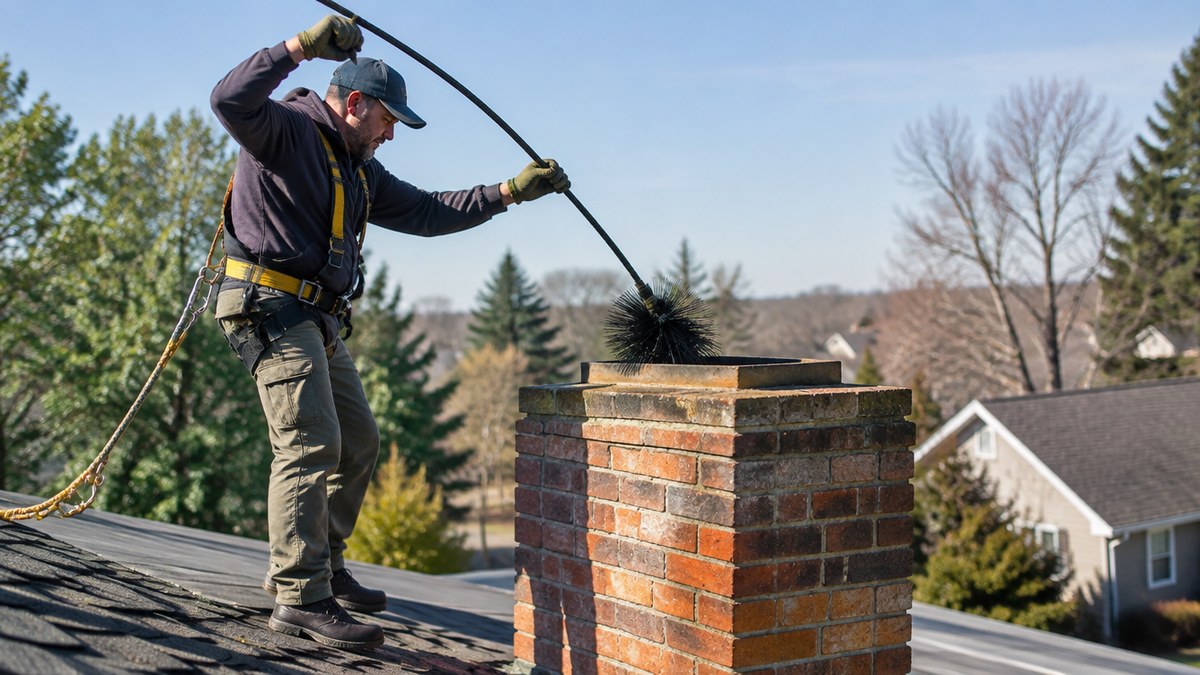
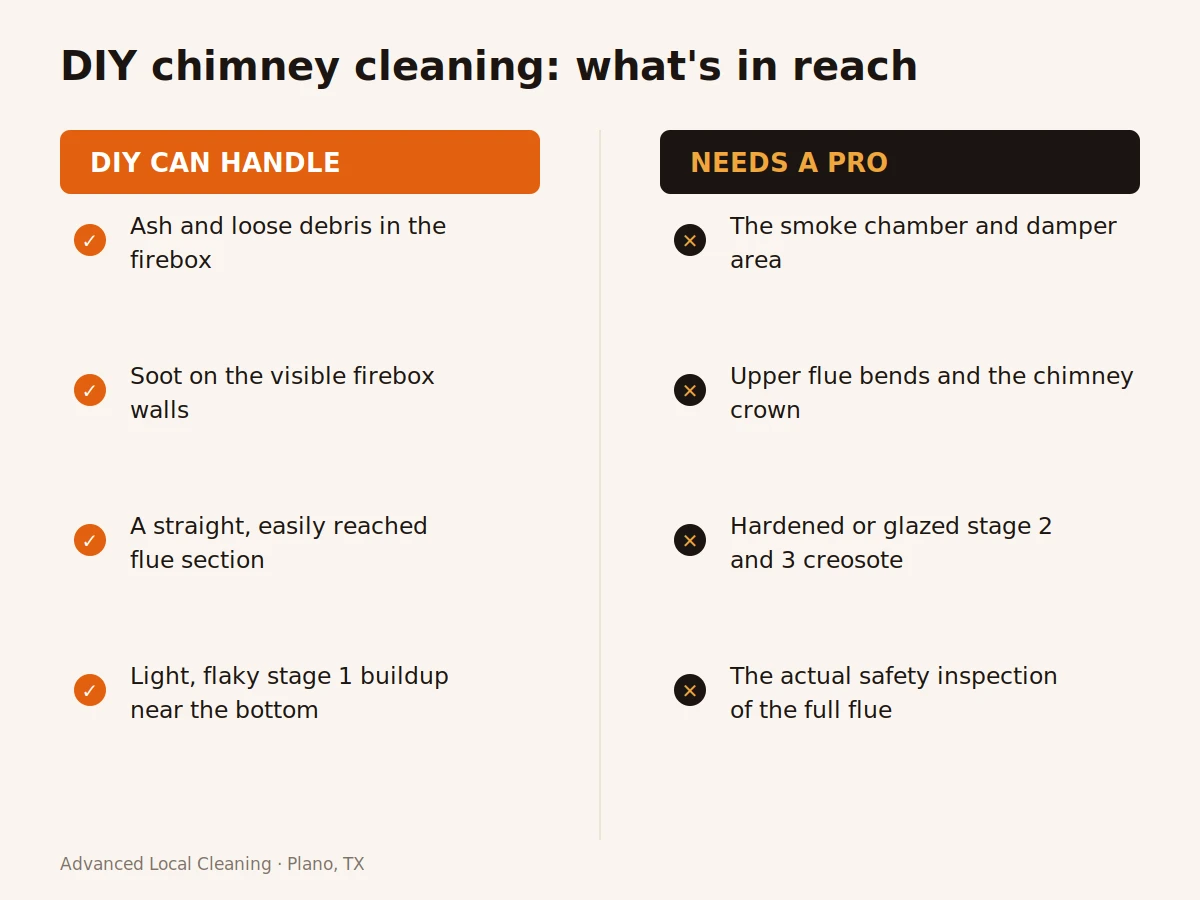
Yes, but only the easy half of the job. A rod and brush kit clears the visible flue and knocks loose the black, flaky buildup a chimney picks up between sweeps. What it will not do is reach the smoke chamber, the damper area, or the bends higher up, where a straight rotary brush behaves differently than the hand brushes a technician uses, and it cannot tell you whether creosote has hardened into the glazed stage that a wire brush will not touch. A DIY pass also skips the actual inspection, the part that catches a cracked crown, an old bird's nest, or flue damage a flashlight from the firebox will never show. For light upkeep between visits, DIY has a real place. For the yearly sweep itself, a CSIA certified inspection catches what a homeowner on a ladder is going to miss.
What DIY chimney cleaning can actually handle
A rod-and-brush kit, extendable fiberglass or poly rods with a wire or synthetic brush sized to the flue, is the standard tool for homeowners who want to do their own upkeep. Hardware stores sell them for somewhere between $30 and $60. Worked from the firebox up, or from the roof down if the chimney is accessible and the pitch is safe, it clears loose ash, knocks down dry flaky buildup, and scrubs a straight section of flue that is easy to reach. That covers a real share of what routine buildup looks like between the professional visits we wrote about in our breakdown of the three creosote stages, especially if the fireplace only sees light seasonal use.
Where DIY earns its keep is maintenance, not inspection. Vacuuming out ash, brushing the firebox walls, and running a brush through the lower flue a few times a season keeps things from piling up between the sweeps that actually matter. It is not a substitute for one of those sweeps. It is what happens in the months between them.
What a brush cannot reach
A straight rotary brush is built for a straight flue. It is not built for the smoke chamber, the wide, irregular space above the damper where a fireplace narrows into the flue, and it does not reach the damper hardware itself. Those areas need hand brushes and angled tools that a technician carries and a hardware-store kit usually does not include. The upper sections of the flue, especially where it bends around framing or a chase, are the other blind spot. A rod can technically reach them, but without visibility into what is actually up there, a homeowner is scrubbing blind and has no way to confirm the result.
That visibility problem matters more than the scrubbing itself. A basic look from the firebox with a flashlight only shows the first few feet of flue. It will not tell you if buildup higher up has crossed into the glazed, glass-like stage that a standard brush cannot remove, the kind we cover in detail in that same creosote stages piece. Finding that requires an actual inspection, sometimes with a camera, not a guess based on how the fireplace smells or drafts.
Do creosote cleaning logs actually work?
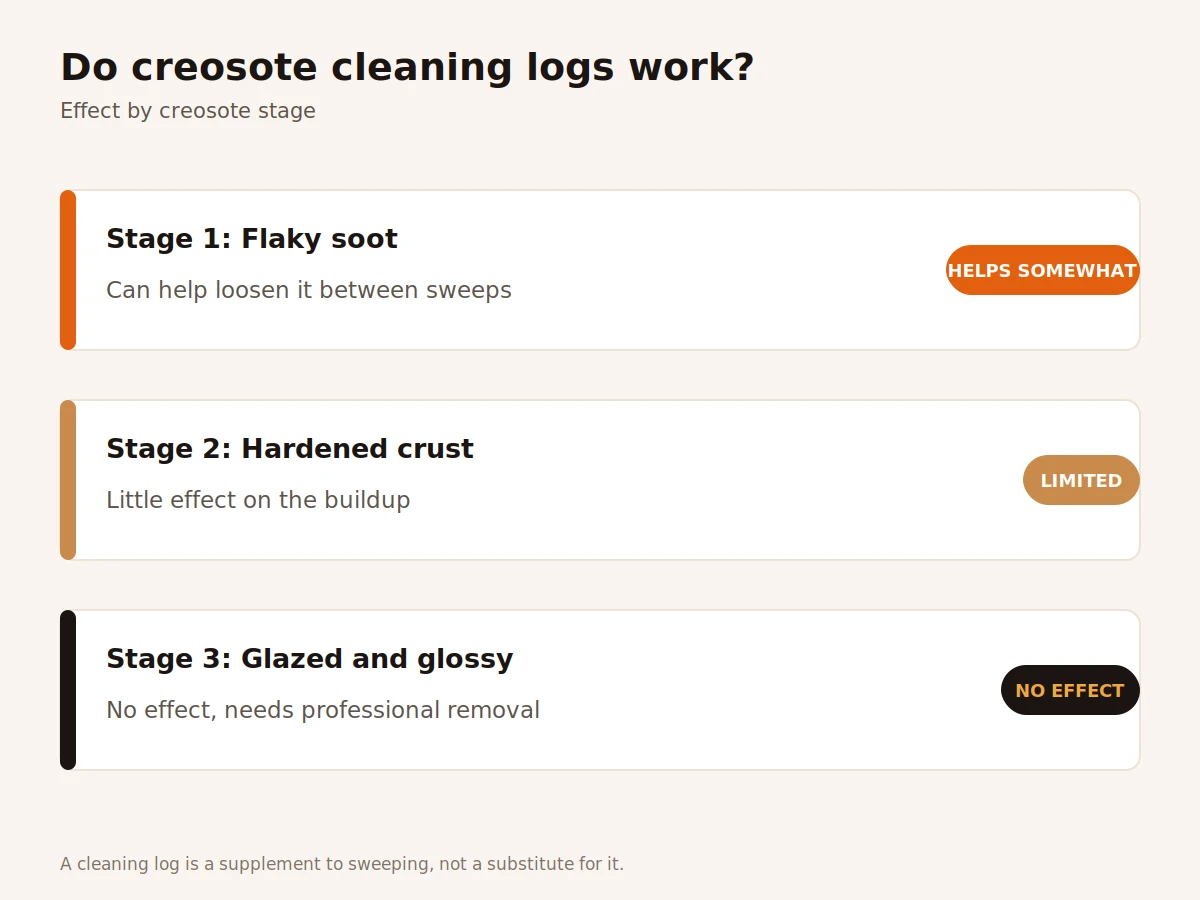
They can help, within limits. Creosote-sweeping logs burn additives that convert some soft, flaky stage 1 buildup into a form that flakes off more easily on its own or during the next brushing. That is a real, if modest, effect. What they do not do is touch the hardened stage 2 crust in any meaningful way, and they have no effect at all on glazed stage 3 creosote, which is fused to the flue wall and needs chemical treatment or specialized rotary tools a log cannot substitute for. Treat a cleaning log as a supplement between sweeps, not a replacement for one, and do not let a box that says "creosote remover" talk you out of an annual inspection.
What to burn if you want less buildup, not how to burn it away
There is no wood or trick that cleans an already-dirty chimney by burning it. Potato peels, aluminum foil balls, and rock salt are common home remedies, and none of them remove existing creosote. What actually reduces how fast buildup forms going forward is burning well-seasoned hardwood, wood that has dried at least six months to a year and looks gray and cracked at the cut ends rather than wet or greenish, at a hot, established fire rather than a smoldering one. Wet or unseasoned wood burns cooler and produces more smoke, and more smoke condensing in a cooler flue is exactly how creosote builds up faster. Never burn trash, wrapping paper, cardboard, or treated or painted wood. Those add their own residue and, in some cases, release chemicals you do not want circulating through the flue and into the yard.
How to sweep your own chimney safely, if you decide to
For the parts DIY can actually handle, a few habits keep it from becoming a bigger job than intended. Lay drop cloths around the firebox before starting, since even a light brushing kicks up soot that travels further than expected. Remove ash and loose debris first so the brush is not just pushing it around. Work the rod-and-brush kit in from the firebox, extending and rotating in short sections rather than forcing it, and pull back out the same way rather than yanking. Wear a dust mask, since soot and creosote dust are not something to breathe in quantity. And know where to stop: if the brush meets resistance that feels hard rather than crumbly, if you smell gas at any point, or if you cannot tell what you are looking at once you get past what a flashlight shows, that is the signal to call someone rather than push further.
When DIY crosses into real risk
Rooftop access is the biggest one. A pitched roof, wet shingles, or a chimney taller than a single story turns a cleaning task into a fall risk, and that risk does not go away just because the brushing itself is simple. Soot and creosote dust are hazardous in quantity, which is why professionals work with respirators and containment rather than an open window and a shop vac. And any DIY pass skips the structural side entirely: a cracked crown, rusted flashing, or an animal that got into the flue over the summer will not show up on a brush, only on an inspection.
Where DIY fits into a normal cleaning schedule
Think of DIY brushing as upkeep between the visits that actually count, not a replacement for them. We cover the specifics in how often a chimney needs cleaning in North Texas, but the short version is that most homes here need one professional sweep and inspection a year, sometimes closer to every eight months for a fireplace in heavy winter use. A homeowner who vacuums ash and runs a brush through the accessible flue a couple of times a season is doing real, useful maintenance. It just is not a substitute for the visit where someone checks the parts a brush cannot reach and confirms nothing has moved past what routine cleaning can handle.
What a professional sweep adds that DIY cannot
Our chimney sweep and cleaning service starts at $99 and the inspection is part of that visit, not an add-on. CSIA certified technicians check the whole system, wood, gas or electric, not just the flue, and show you what they found before they leave rather than just saying it is done. Same-week appointments are typical, cleanup is HEPA filtered so it does not leave a mess behind, and most homes take about an hour. Stage 1 and most of stage 2 buildup come out in that same visit with rotary brushes. Glazed stage 3 is the one exception, and if we find it, our creosote removal service quotes it once we can see how much of the flue is actually affected, since a small glazed section costs a lot less to clear than one that is glazed top to bottom.
Signs it is time to stop DIYing and call someone
- A strong smoky smell when there is no fire going, especially on humid days
- It has been more than a year since the last professional sweep and inspection
- Visible buildup that looks glossy or black-glazed rather than dry and flaky
- A fireplace that drafts poorly or lets smoke back into the room
- You just moved into an older home and do not know the chimney's history
Not sure if your chimney needs more than a brush?
We will inspect it, tell you plainly what we find, and clear what we can the same visit. Based in Plano, working across DFW since 2013.
Common questions about DIY chimney cleaning
Do creosote cleaning logs actually work?
They can help loosen light, flaky stage 1 buildup between professional sweeps, but they do little to a hardened stage 2 crust and nothing to glazed stage 3 creosote. Treat them as a supplement to sweeping, not a substitute for it.
What should I burn to help keep my chimney clean?
Well-seasoned hardwood that has dried at least six months to a year, burned at a hot, established fire rather than a smoldering one. Wet or green wood burns cooler and builds creosote faster. No wood or additive removes buildup that is already there.
How do I sweep my own chimney safely?
Lay drop cloths, clear out ash first, then work a rod-and-brush kit from the firebox in short sections rather than forcing it. Wear a dust mask, and stop if the brush meets hard resistance or you smell gas.
Can I tell if I have glazed creosote myself?
Not reliably. Glazed stage 3 buildup often sits higher in the flue than a flashlight from the firebox reaches, which is why an actual inspection, sometimes with a camera, finds it and a DIY look usually does not.
What does a professional sweep cost if I decide not to DIY?
Our chimney sweep and inspection starts at $99 for most homes, with the inspection included rather than billed separately. Glazed creosote removal is quoted after we can see how much of the flue is affected.