
Carbon Monoxide and Your Fireplace: Detector Placement and Warning Signs
How a fireplace ends up producing a CO problem, where to put detectors, and which symptoms mean get out of the house.
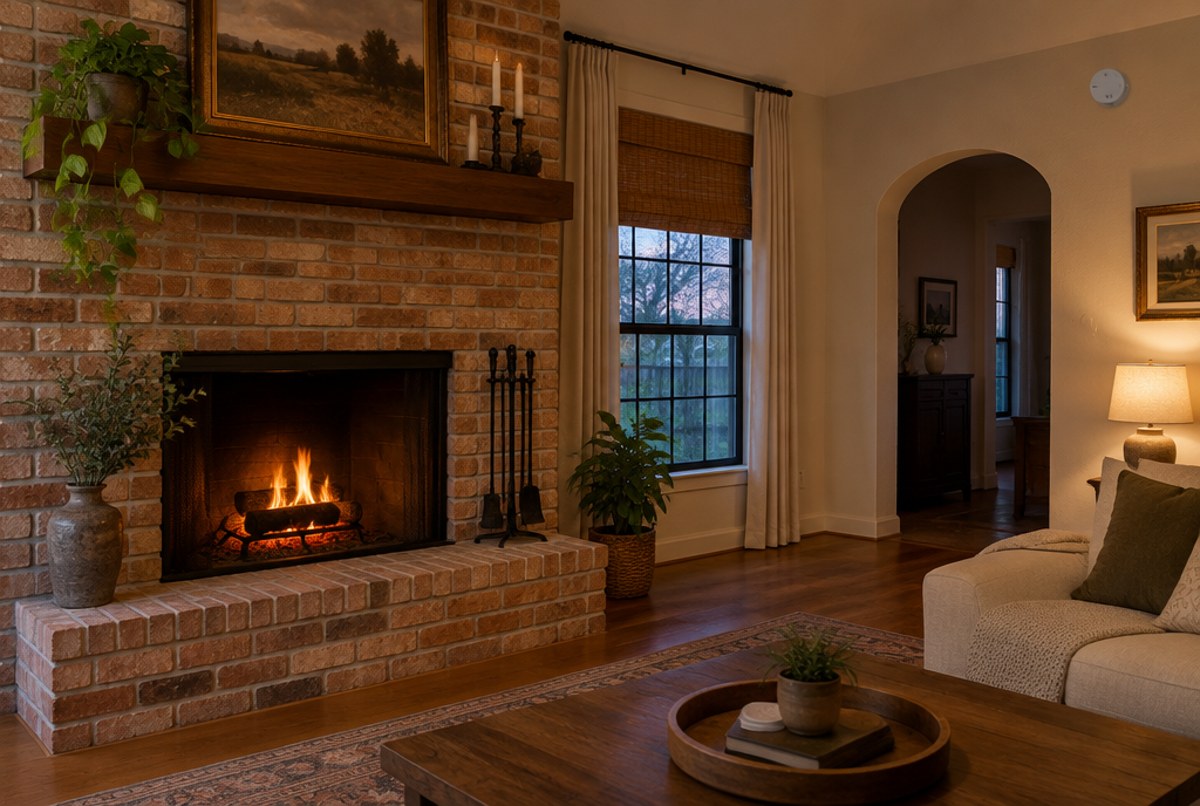
A fireplace makes carbon monoxide any time fuel burns, and the risk to your family starts when the flue cannot carry it outside because of a blocked chimney, a closed damper, a cracked liner or weak draft. Put a CO detector on every level of the home and outside each sleeping area, plus one in the fireplace room a few feet from the hearth, and test them monthly. Headache, dizziness, nausea and tiredness that fade when you leave the house are the classic warning signs. If anyone has them, or an alarm sounds, get everyone outside and call 911.
Where fireplace carbon monoxide comes from
Carbon monoxide, or CO, is a gas you cannot see or smell. It forms whenever wood, gas or any other fuel burns without enough oxygen to burn completely. A wood fire always makes some. A gas log set makes less, but a badly adjusted burner can make more than you would expect. In a healthy fireplace the CO rides the hot exhaust up the flue and leaves with the smoke, and you never think about it.
The trouble starts when the exhaust has somewhere else to go. A fireplace is only safe when the whole path from the firebox to the top of the chimney is open, sound and pulling in the right direction. Anything that breaks that path can push CO into the room.
What makes a fireplace spill CO into the house
The most common cause we see is a partly blocked flue. Creosote buildup, a collapsed piece of clay liner, leaves, or a bird or squirrel nest can all narrow the passage until the exhaust backs up. A cracked or deteriorated liner can also leak exhaust into the chimney walls and, in some homes, into the attic or a wall cavity.
A closed or half-closed damper is the second big one. People close the damper on a dying fire to keep the heat in, and the embers keep producing CO for hours. The damper should stay fully open until the ashes are cold. The same rule applies to gas logs, which must burn with the damper locked or clamped open.
The third cause is draft that has stopped working. Newer North Texas homes are built tight, and a kitchen exhaust fan, a clothes dryer or a bathroom fan can pull air down the chimney and drag the smoke with it. Cold flues, chimneys that are too short for the roofline and flues that are the wrong size for the firebox cause the same problem. Our guide to how chimney draft works explains why, and our piece on why a fireplace smells covers the smoke and odor clues that often show up first.
Last, ventless gas logs release their exhaust into the room by design. They include an oxygen sensor and burn very cleanly, but they are one more reason to have working detectors in the house.
Season matters in North Texas. A chimney that sat unused all summer has had months for birds, squirrels and wasps to move in, and a hard freeze or a spring hailstorm can crack a crown or knock a cap loose without anyone noticing from the ground. The first cold evening is a bad time to find out. If you have not used the fireplace since last winter, treat the first fire as a test: open the damper fully, watch that the smoke rises cleanly, and stop and put the fire out if smoke drifts into the room or you smell anything sharp or sour.
\nFactory-built fireplaces, common in newer DFW subdivisions, add one more wrinkle. They use a metal flue system that has to match the firebox, and parts that are rusted, loose or from a different manufacturer can leak exhaust. If you are not sure whether yours is masonry or prefab, our guide on how to tell which chimney you have walks through it.
\n\nWhere to put carbon monoxide detectors
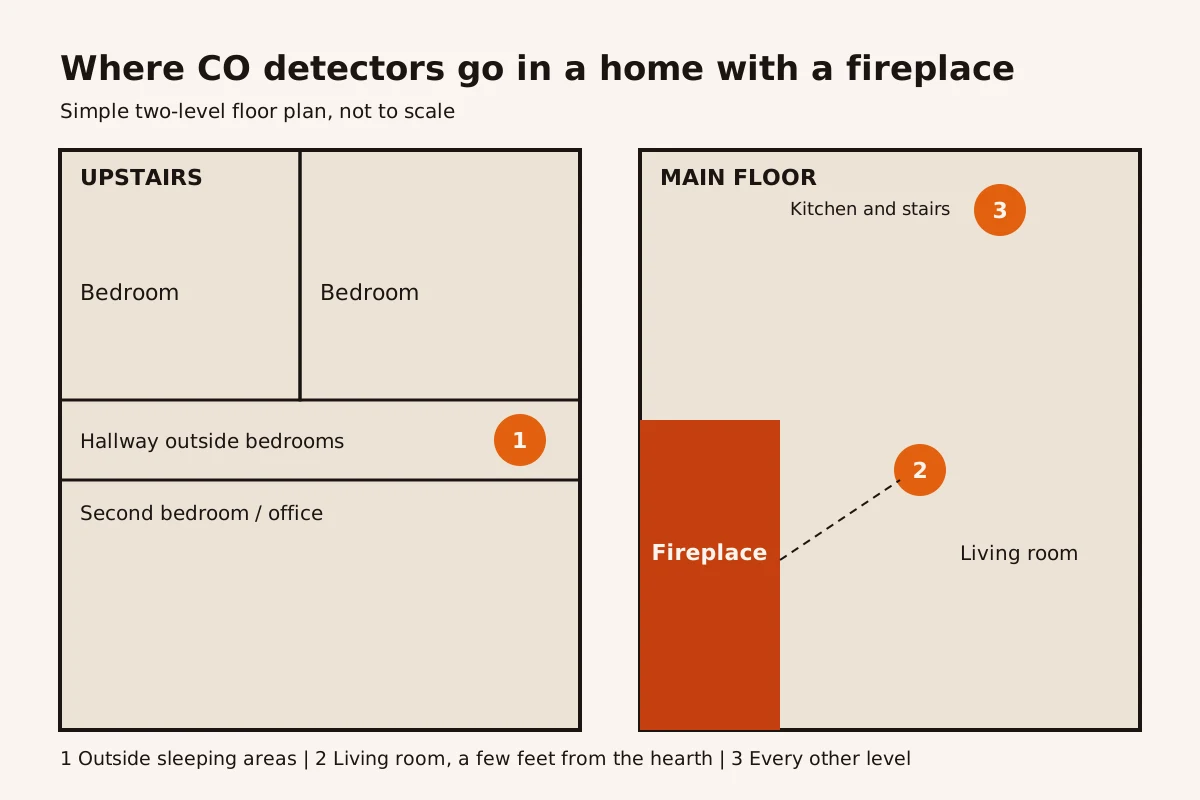
The standard advice from safety agencies is simple. Install a CO alarm on every level of the home, including the basement, and put one outside each sleeping area so it can wake people who are asleep. If a bedroom is far from the hallway, a detector inside the room is reasonable too. A fireplace room deserves its own detector, because that is where a spill would show up first.
Placement matters less than people think for the gas itself, since CO mixes evenly through room air rather than sitting only at the ceiling or the floor. What matters more is following the instructions on the package for the model you bought. Plug-in models belong in an outlet that is not blocked by furniture or curtains. Wall models go at the height the maker states. Keep any detector a few feet away from the hearth, away from the kitchen range and away from bathrooms with a lot of steam, because direct exposure to fumes or humidity can set off false alarms that tempt people to unplug the unit.
Keeping the detectors working
A detector that is dead does nothing. Press the test button once a month, and replace the batteries on the schedule the maker gives, or whenever the unit chirps. Every CO alarm has a limited life. Most are rated for somewhere between five and ten years, and the end-of-life date is printed on the back, so write the replacement year on the unit with a marker the day you install it. Models that plug into the wall with battery backup keep working through a storm outage, which matters in North Texas winters when the power can drop and people light the fireplace.
It also helps to know what an alarm is telling you. CO alarms are built to sound after a period of exposure, and a higher concentration sounds faster. A short chirp every minute or so usually means a low battery or an expired unit, while a continuous alarm pattern means CO. Treat every continuous alarm as real until you know otherwise.
Warning signs of CO poisoning
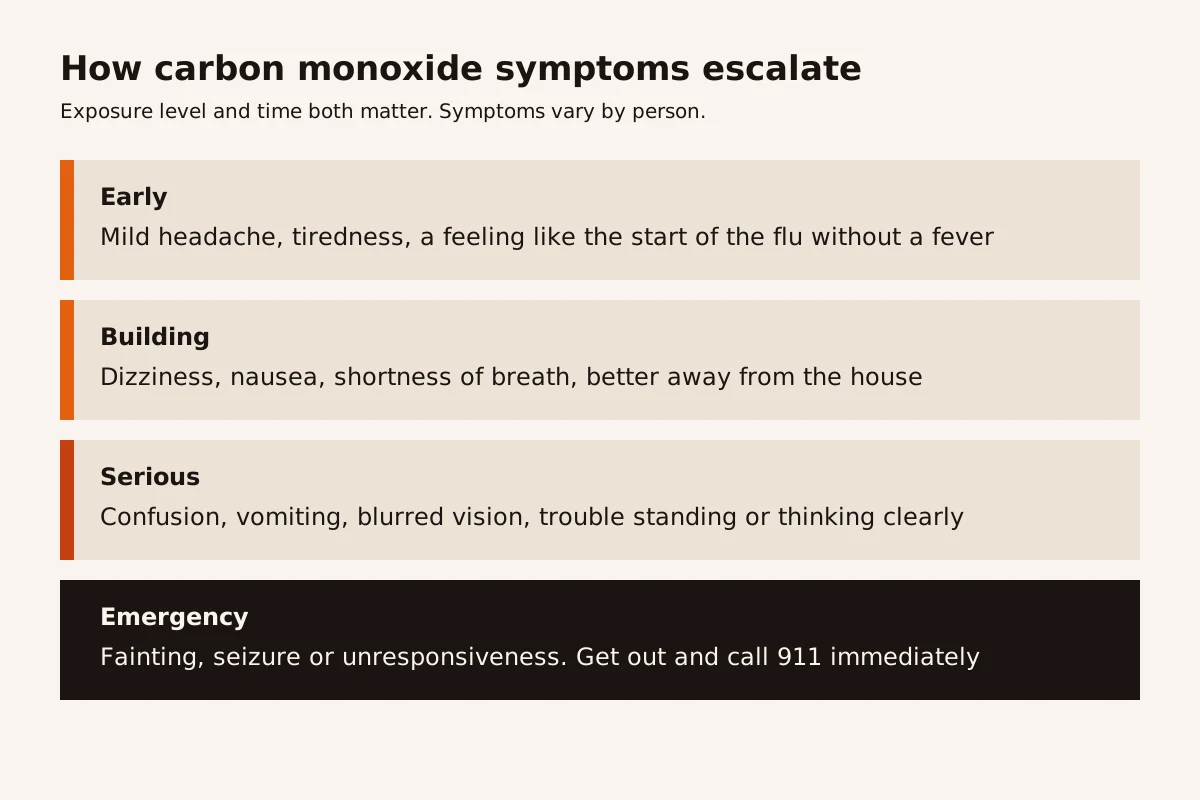
The early symptoms are easy to miss because they look like a cold or the flu without the fever. Headache is the most common, along with tiredness, mild nausea and a general feeling of being unwell. As the level rises, people get dizzy, short of breath and nauseated, and often feel better when they step outside and worse again when they return. Higher exposure brings confusion, vomiting, blurred vision and trouble standing or thinking clearly, and the highest levels can cause fainting, seizures and death.
Two patterns are worth remembering. First, everyone in the house feels it, and pets often show signs before people do. Second, the symptoms follow the fire or the appliance. If the whole family has headaches on fireplace evenings and feels fine at work or at a friend's house, take that seriously and have the fireplace checked before you light it again.
What to do if an alarm sounds
Do not stop to open windows or work out where it came from. Get every person and pet outside into fresh air, then call 911 from outside. The fire department can measure CO levels in the house and tell you when it is safe to go back in. Anyone with symptoms should be checked by a doctor, even if they feel better outdoors, because CO leaves the body slowly. The national Poison Help line, 1-800-222-1222, can also answer questions about exposure.
Do not use the fireplace again until it has been inspected. If the alarm sounded while a fire was burning, the cause is almost always in the chimney or the burner, and it will not fix itself.
How to lower the risk before it becomes a problem
Prevention comes down to keeping the exhaust path open and well-built. Have a wood-burning chimney swept and inspected once a year, and a gas fireplace serviced once a year, before the first fire of the season. A sweep clears creosote, nests and debris, and an inspection catches cracked liners, failed crowns and caps and damper problems that cause spillage. You can read what a technician looks at in our gas fireplace inspection checklist, and see how we handle the work on our chimney services page.
Between visits, a few habits help. Open the damper before you light the fire and keep it open until the ashes are cold. Burn seasoned hardwood rather than wet wood, which smolders and makes more CO. Never burn trash, charcoal or a gas oven for heat in the house. If a kitchen or dryer fan seems to pull smoke back into the room, crack a window before lighting the fire and tell your technician about it.
None of this replaces a working detector. The detector is the last line of defense when everything else has failed, and it costs far less than a repair or a hospital visit.
Want the flue checked before the fires start?
We inspect the flue, damper, liner and firebox, tell you plainly what we find, and give you a written, itemized estimate before any work begins. Based in Plano, working across DFW since 2013.
Common questions about fireplaces and carbon monoxide
Can a fireplace cause carbon monoxide poisoning?
Yes. Any fireplace that burns fuel makes carbon monoxide, and a blocked flue, closed damper, cracked liner or poor draft can push it into the room.
Where should a carbon monoxide detector go near a fireplace?
Put one in the fireplace room a few feet from the hearth, one outside each sleeping area and one on every level of the home. Follow the maker instructions for exact placement.
Do gas fireplaces need a carbon monoxide detector?
Yes. Gas logs and gas fireplaces can release carbon monoxide if the burner, vent or flue has a problem, so working detectors are recommended with every type.
What are the first signs of carbon monoxide poisoning?
Headache, tiredness, dizziness and nausea that ease when you leave the house are the usual early signs. They are easy to mistake for the flu.
What should I do if my carbon monoxide alarm goes off?
Get everyone and every pet outside, call 911 from outside, and do not use the fireplace again until it has been inspected.