
What Wood to Burn in North Texas and What to Never Burn
Which local woods burn best, how dry is dry enough, and what never belongs in a fireplace.
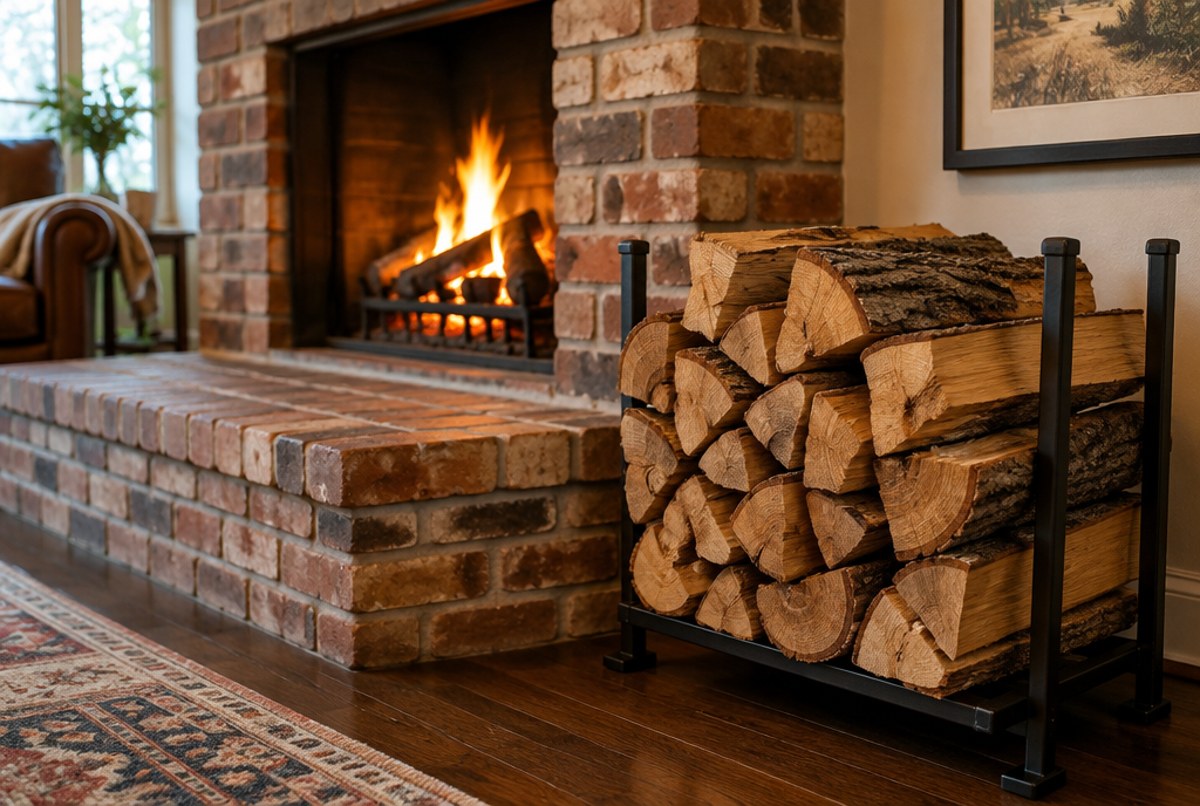
The best firewood for a North Texas fireplace is seasoned oak, split and dried to under 20 percent moisture, which takes about a year for oak. Post oak and live oak burn long and leave good coals, hickory burns hot and fast, and mesquite burns hot but gives off harsh smoke if you choke the fire down. Skip green wood, and skip pine and cedar as your main fuel, because wet and resinous wood coats the flue with creosote. Never burn treated or painted lumber, plywood, plastic, driftwood or a Christmas tree. The fuel you choose decides how fast your chimney builds creosote.
Why the wood matters to your chimney
Most people choose firewood for how it burns. A chimney sweep also cares about what it leaves behind. Wood that is wet or full of resin burns cool and smoky, and that smoke condenses on the cooler flue walls as creosote. Dry hardwood burns hotter and cleaner, so less of it ends up in the flue. If you want to see what that buildup looks like, our guide to creosote stages 1, 2 and 3 shows each one, and our creosote removal page explains how we deal with the worst of it.
Good firewood is the cheapest chimney maintenance there is. It will not replace a yearly sweep, but it changes how much the sweep has to remove.
The best woods to burn in North Texas
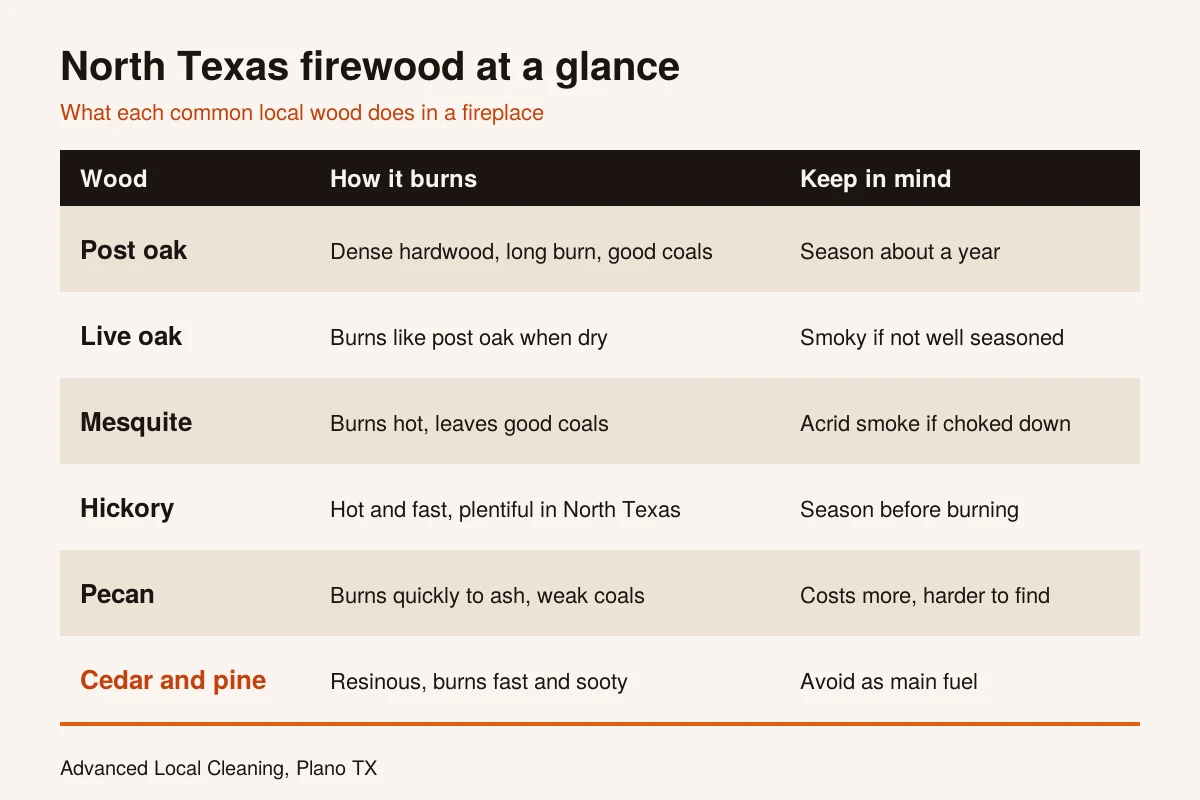
Dense hardwoods are the standard answer, and in this part of Texas that mostly means oak. This Old House lists red and white oak among the best fireplace woods for their heat, long burn time and good coals. Local suppliers sell several oaks under a few names, so here is what the Texas favorites do in a fireplace.
Post oak is the wood most North Texas wood yards sell, and it is popular enough that some suppliers pass off other oaks as post oak. It burns steadily and leaves coals. Live oak burns much the same as long as it is well seasoned, and it gives off a lot of smoke if it is not. Hickory is most plentiful in northern Texas, burns hot and fast. Mesquite burns hot and leaves good coals, but Texas Monthly notes it throws strong, acrid smoke when the fire is stifled, so leave the damper fully open and let it burn freely. Pecan burns quickly to ash without building strong coals, and it costs more and is harder to find than post oak.
Seasoned versus green wood
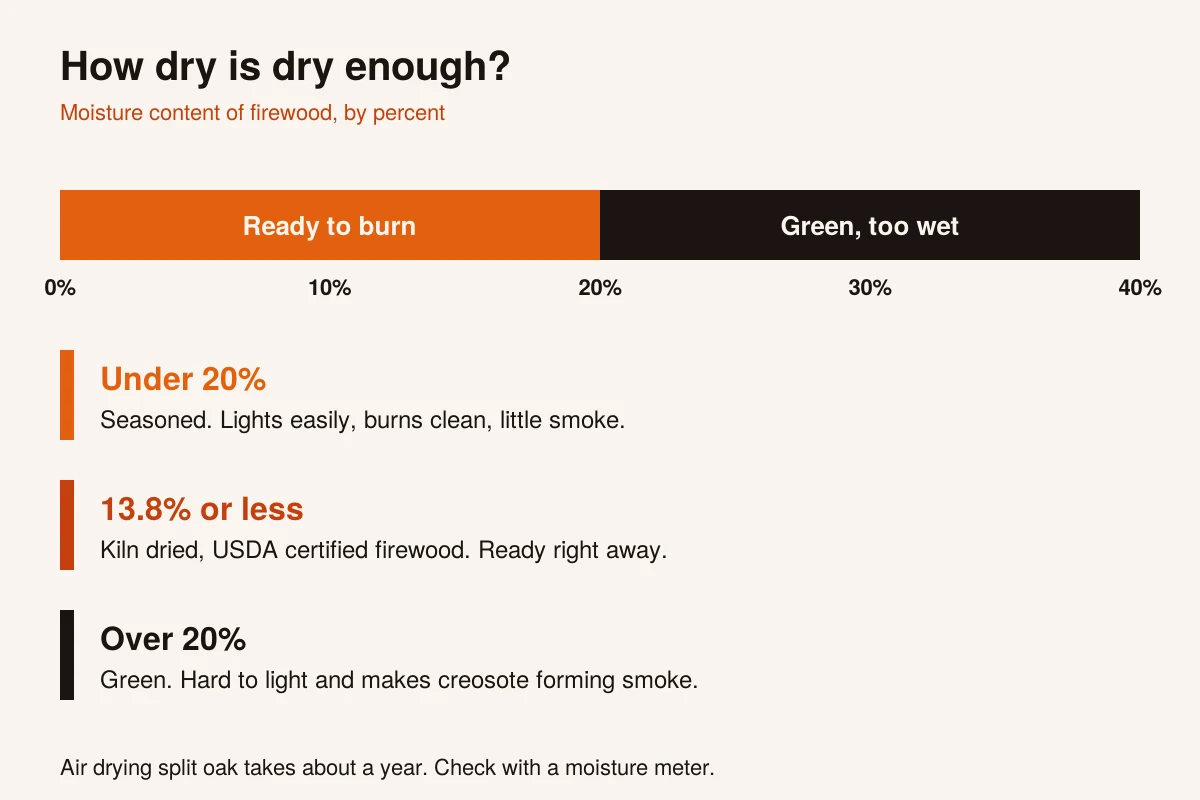
Freshly cut wood is mostly water. This Old House puts green wood at above 20 percent moisture content and notes it is hard to light and makes the kind of smoke that forms creosote. A fire spends its energy boiling that water off instead of heating your room, and the steam and smoke cool the flue, which is exactly where creosote forms.
Seasoning is just drying. Split wood air dries for about a year, according to This Old House, and a Texas barbecue source describes post oak cut 16 to 18 inches long, split to 3 to 6 inches across and seasoned for about a year. Splitting matters because it gives the moisture more surface to leave from. Wait until the wood reaches about 20 percent moisture before you burn it.
Kiln dried wood is the fast route. Look for USDA certified kiln dried firewood at 13.8 percent moisture or less, which is ready to burn right away. If you only burn a few fires a season, it can be the easier choice.
How to tell if firewood is dry
A moisture meter is the reliable way. They are cheap, and you read a freshly split face of a log, not the outside. Without one, look at the wood. Seasoned wood has cracks across the cut ends, bark that is loose or falling away and a light weight for its size. Texas A&M Forest Service gives similar advice when it tells buyers to choose wood that is dry with loose bark and cracked ends, and to avoid oak with tight bark and uncracked ends.
That same agency also warns that moving wood from diseased oaks can spread the oak wilt fungus, so buy from a supplier who can tell you where the wood came from and how long it has dried. If you cut your own oak, do it well before the next season so it has time to dry, and keep it stacked and covered.
How to store it so it stays dry
Stack the wood loosely enough that air moves through it, and cover it with a tarp when it rains. A Texas barbecue source describes keeping seasoned wood in a cage with good circulation and protection from rain, and a log rack on a patio does the same job at home. Bring in only a day or two of wood at a time so it can sit at room temperature before you burn it. Wet wood that dries out slowly under a tight cover is still wet wood, so never wrap the whole stack in plastic.
What to ask when you buy firewood
\nAsk what species it is, how long it has been split and dried, and whether the supplier can show you a moisture reading. Look for cracked ends and loose bark, and be wary of a load that looks freshly cut with tight bark and uncracked ends. Texas A&M Forest Service gives that last warning for oak specifically. Wood sold as post oak is not always post oak, so a seller who is vague about species is worth a second question. If a load turns out wet, stack it and let it dry rather than burning it to be done with it.
\n\nThe never burn list
Some things should not go in a fireplace whatever the weather and however tempting the pile of scraps. The reasons below come from the heating and fireplace experts quoted by Tom's Guide.
- Treated or painted wood, including plywood, building scraps, deck boards and old furniture. The chemicals release toxic fumes and can damage metal parts in the chimney.
- Wet or green wood. It makes smoke and steam that cool the flue and leave creosote on the walls.
- Driftwood. It carries salt, which turns into an acidic vapor that wears down the fireplace body and the liner.
- Christmas trees. The glue and sap can make branches flare, and the sudden heat can crack stove glass or chimney brick and throw sparks.
- Cardboard and boxes. It burns fast and hot, and light, burning ash can float up the chimney and land on a roof.
- Plastic. It gives off toxic fumes and leaves an acidic, sticky film in the flue.
- Glossy magazines. The inks and bleaches can release harmful chemicals and the paper makes thick black smoke.
Pine, fir and cedar are a gray area. They are soft and resinous, and This Old House says such woods burn fast, make a lot of smoke and coat flues with creosote. Use a little as kindling if you like, and burn oak for the main fire.
What your chimney shows you
Whatever you burn leaves a record in the flue. A sweep who sees heavy, shiny, tar like buildup in a chimney that only sees a few fires a year is usually looking at wet wood, a fire that was damped down too much, or both. Dry hardwood and a fire with enough air leave a thin, dry, sooty layer that brushes out. If you are not sure how often yours needs attention, read how often to clean a chimney in North Texas, and use our first fire of the season checklist before you light the year's first fire.
A build of creosote is also what feeds a chimney fire, so it pays to read what causes a chimney fire before you burn anything questionable.
A simple plan for the season
Buy oak that is already seasoned, check it with a meter or by the cracks and bark, stack it off the ground and covered, burn it hot with the damper open, and keep the never burn list in mind. If you buy green wood by mistake, stack it and wait a year rather than burning it. Then have the chimney checked once the season ends, so you know what the wood did.
Not sure what your chimney has been through?
A sweep shows you what your wood has been doing in the flue. Based in Plano, working across DFW since 2013. Call or ask for a visit and we will tell you plainly what we find.
Common questions about firewood in North Texas
What is the best firewood to burn in North Texas?
Seasoned oak, mostly post oak or live oak, dried to under 20 percent moisture. It burns long and leaves good coals. Hickory is a good hot burning second choice.
How long does firewood need to season?
Split oak needs about a year of air drying. Kiln dried firewood at 13.8 percent moisture or less can be burned right away.
Is mesquite good firewood for a fireplace?
It burns hot and leaves good coals, but it gives off harsh smoke if you choke the fire down. Keep the damper open and the fire burning freely.
Can you burn pine or cedar in a fireplace?
Dry pine and cedar will burn, but they are resinous, burn fast and coat the flue with creosote. Use them as kindling and burn oak for the main fire.
What should you never burn in a fireplace?
Treated or painted wood, plywood, plastic, cardboard, glossy magazines, driftwood, Christmas trees and wet green wood.