
Signs Your Dryer Vent Is Clogged
From a load that needs two cycles to a burning smell you should never ignore. The signs, in the order they actually show up.
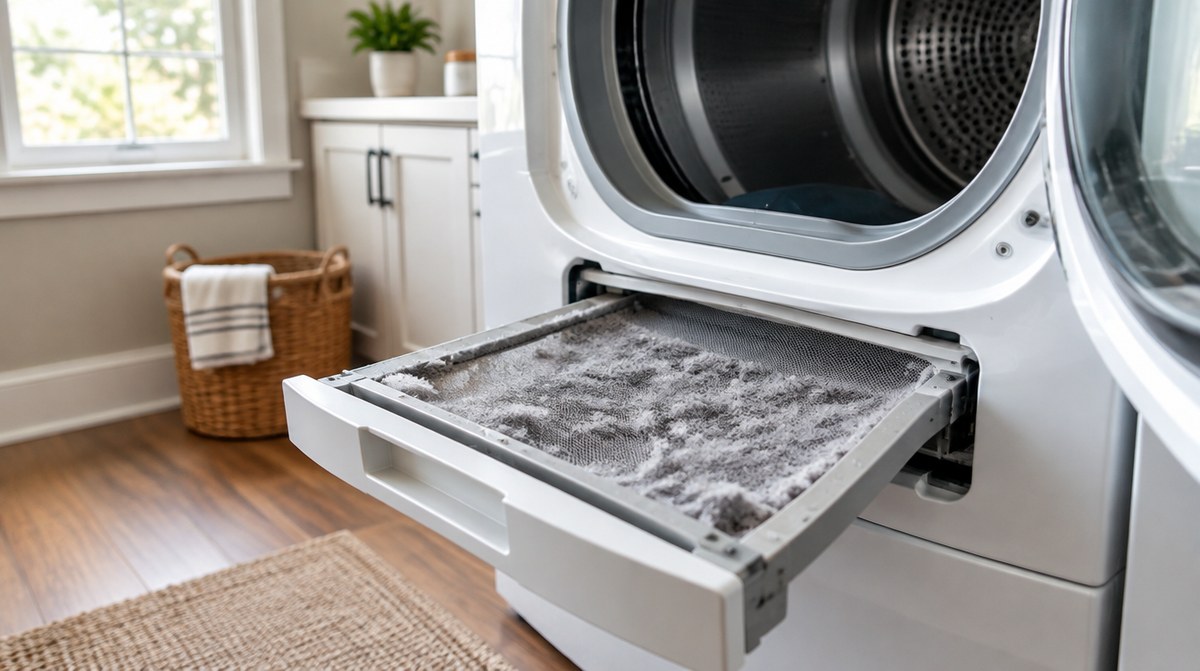
A clogged dryer vent shows up gradually before it becomes a fire risk. Early on, a load that used to finish in one cycle starts needing two, and clothes come out hotter than usual. As the blockage grows, the exterior vent hood barely moves air, or its flap stays shut, while lint collects visibly around the outside opening and a musty smell settles into the laundry room. The signs that mean stop now are a burning or hot-dust smell during the cycle, a dryer that shuts itself off mid load, or heat coming through the cabinet or the wall behind it. Catch the early signs and a cleaning takes care of it. Reach the urgent signs and it stops being a maintenance question and becomes a safety one.
The full list, from easy to miss to urgent
Most homeowners do not notice a dryer vent clogging up. It happens over months, one load at a time, and the dryer keeps working the whole way through, just less efficiently with each cycle. The list below is ordered the way these signs actually show up in a real home, from the kind of thing you might not think twice about to the kind of thing that means turning the dryer off right now.
Early signs: worth watching
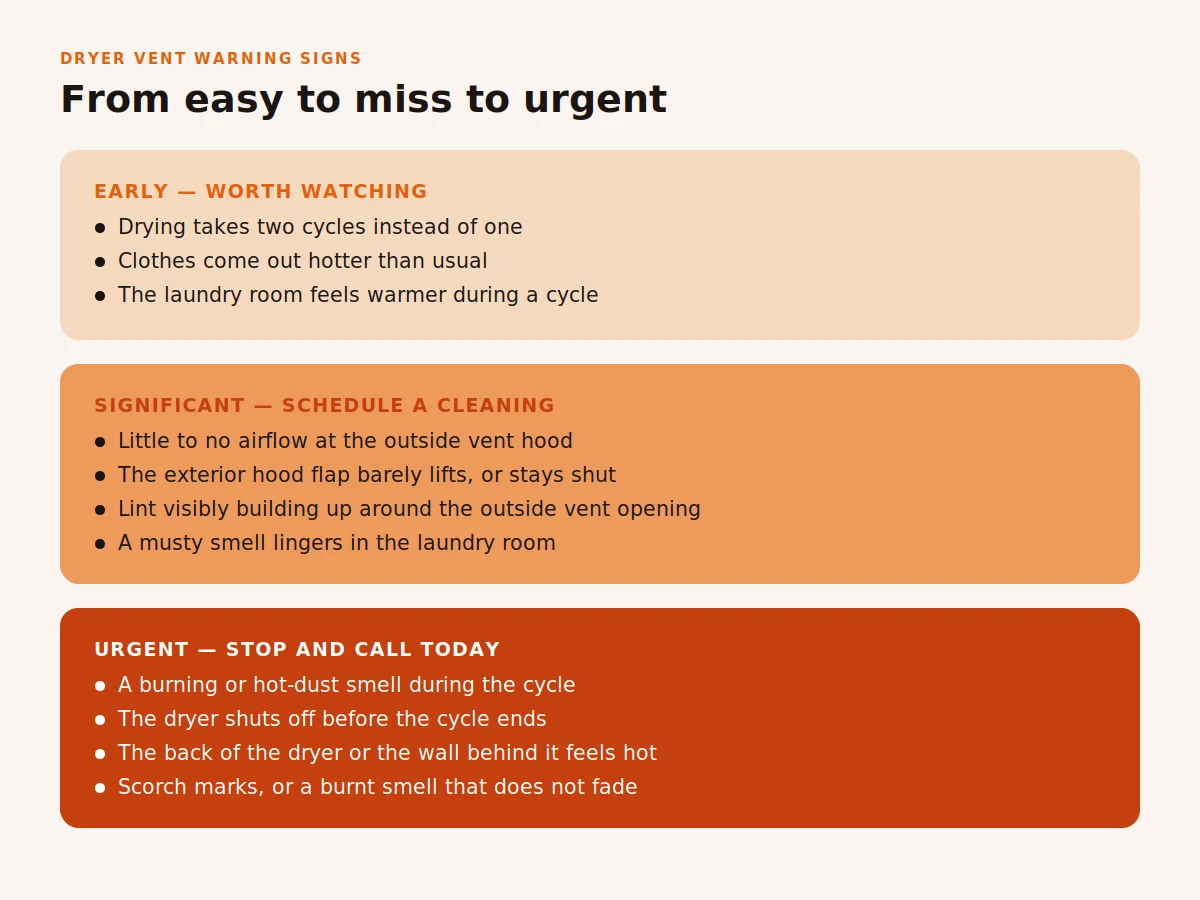
- Drying takes two cycles instead of one
- Clothes come out hotter than usual at the end of a cycle
- The laundry room feels warmer than the rest of the house while the dryer runs
None of these are urgent on their own. A single hot load or one long cycle can just mean a heavier load than usual. It is the pattern that matters: if this is now the normal way your dryer runs, airflow is already more restricted than it should be, and it is worth getting on the calendar before the next stage of signs shows up.
Significant signs: schedule a cleaning
- Little to no airflow at the outside vent hood while the dryer is running
- The exterior hood flap barely lifts, or stays shut
- Lint visibly building up around the outside vent opening
- A musty smell that lingers in the laundry room even after the load is done
These signs mean the duct is carrying meaningfully less air than it is supposed to. You can check the first two yourself in about thirty seconds: start a load, then walk outside to where the vent exits the house and hold a hand near the hood. A working vent pushes a steady stream of warm air and visibly lifts the flap. A clogged one produces a weak trickle of air or none at all.
Urgent signs: stop and call today
- A burning or hot-dust smell during the cycle
- The dryer shuts off before the cycle ends
- The back of the dryer, or the wall behind it, feels warm or hot to the touch
- Scorch marks, or a burnt smell that does not fade after the dryer is off
If you are seeing any of these, do not run another load. A dryer that shuts itself off mid cycle is very often its thermal safety fuse doing exactly what it is designed to do, cutting power before trapped heat goes any further. Treat that as the dryer telling you something, not a glitch to work around by restarting it.
Why the signs escalate in this order
A dryer vent's whole job is to carry hot, moist air and lint out of the house in one continuous path. Lint does not distribute evenly along that path. It collects at bends, at the transition hose, and near the exterior termination, narrowing the usable opening a little more with every load. A narrower opening means the dryer has to work harder to push the same volume of air through, which is why the earliest sign is almost always more heat and a longer cycle rather than anything dramatic.
As the restriction gets worse, less air escapes and more of it, along with the heat that comes with it, stays inside the duct and inside the dryer cabinet. That is the stage where the exterior hood stops moving and moisture that should have vented outside starts showing up as a musty smell indoors instead. Push past that stage and there is nowhere left for the heat to go. The dryer's internal temperature climbs past what its components are built to handle, which is when a burning smell, a tripped thermal fuse, or a hot cabinet shows up. Every one of these stages is the same underlying problem getting worse, not a series of separate issues.
What this looks like in a North Texas laundry room
Newer two-story construction across Frisco, McKinney, Prosper and west Plano tends to put the laundry room upstairs, which means the vent run has to climb through the attic and exit through a roof cap instead of ducking straight out a nearby wall. Those longer, vertical runs build up lint faster than a short wall vent does, so the early signs in that kind of home often show up within a year of the last cleaning rather than two.
Older single-story homes across Plano, Carrollton and Richardson usually have a short, straight wall vent a few feet from the laundry room, which is close to the best-case setup. Signs still show up eventually, just more slowly, and a vent that has never been cleaned since the home changed hands is a common finding on a first visit regardless of how short the run is. Humidity plays a role too. A muggy North Texas summer makes the musty-smell sign more noticeable indoors, since moisture that should be venting outside has fewer places to escape once the airflow is already restricted.
If you are smelling something burning right now: turn the dryer off and unplug it or switch off its breaker. Do not start another load to see if it clears on its own. If the smell is faint and fades once the dryer is off, have the vent inspected before the next use. If it is strong, does not fade, or you see smoke, treat it like any other appliance fire risk: get everyone clear and call for help.
What to do at each stage
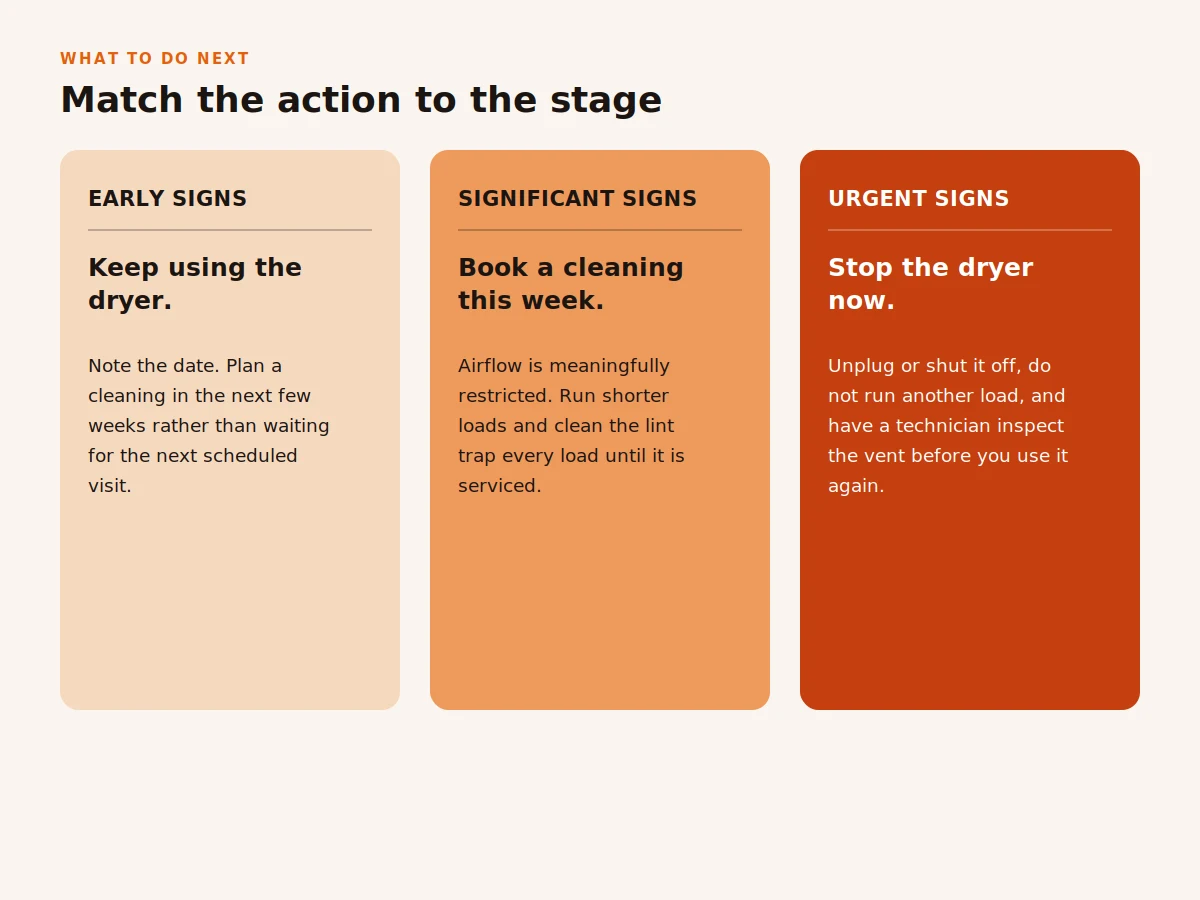
An early sign is worth a note on the calendar and a cleaning in the next few weeks, not an emergency call. A significant sign means the airflow restriction is real, so book a cleaning this week and clean the lint trap every single load until it is done. An urgent sign means stopping the dryer immediately and having a technician inspect the full duct, from the connection at the back of the dryer to the exterior termination, before it runs again.
Catching a clogged vent earlier is always the cheaper, easier version of the same fix. You can see what a full duct cleaning covers on our dryer vent cleaning page, and if you want the baseline schedule for your specific setup rather than waiting for signs to appear, our guide to how often to clean a dryer vent breaks it down by household size and vent run.
Seeing more than one of these signs?
We will check the full run, tell you honestly which stage you are at, and clean it the same visit if it needs it. Based in Plano, working across DFW since 2013.
Common questions about clogged dryer vent signs
Is a burning smell from the dryer always an emergency?
Treat it as one until you know otherwise. A faint smell that fades once the dryer is off still means the vent needs to be inspected before the next load. A strong or persistent smell, or any visible smoke, means stop and call for help immediately, the same as with any other appliance fire risk.
I already clean the lint trap every load. Why would the vent still clog?
The trap only catches lint that is small enough and close enough to be caught there, generally cited at around 90 to 95 percent of what a load produces. The rest travels into the transition hose and the duct itself, where a lint trap can never reach it. That is the part these signs are describing.
Can a clogged dryer vent actually start a fire?
Yes. Restricted airflow makes the dryer run hotter than it is designed to, and lint is highly flammable. The U.S. Fire Administration lists failure to clean as the single leading cause of home clothes dryer fires, which is why the urgent signs in this list are worth treating as a stop-and-call situation rather than something to work around.
My dryer shuts off before the cycle ends. Is that the vent?
It is one of the more common causes. Many dryers have a thermal fuse or high-limit switch that cuts power when internal temperature climbs too high, which a badly restricted vent will do. It can also be a failing part unrelated to the vent, so this is a good one to have a technician diagnose rather than guess at.
How quickly do these signs usually appear after a cleaning?
It depends on the household and the vent run, generally somewhere between six months and two years. A longer, bent, or roof-terminated run and a heavier laundry schedule push toward the shorter end. Our guide to how often to clean a dryer vent breaks the interval down by setup if you want a specific starting point.