
What Is a Chimney Flue and Is Yours the Right Size?
What the flue does, the ratio rule that sets its size, and the signs it does not match your fireplace.
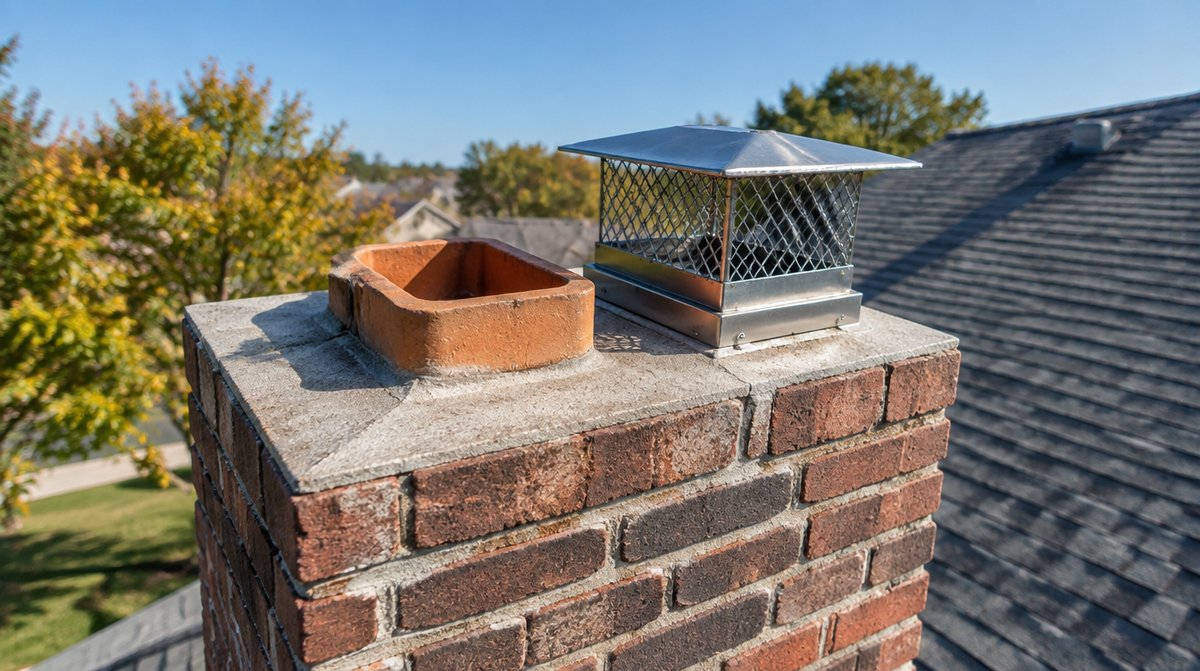
A chimney flue is the passage inside your chimney that carries smoke and combustion gases from the fireplace up and out of the house. For a masonry fireplace, its cross-section should be roughly one tenth of the fireplace opening's area, and the model residential code sets the floor at one twelfth for a round liner, one tenth for a square one and one eighth for a long rectangle. A 32 by 27 inch opening, for example, calls for about 72 to 108 square inches of flue depending on its shape. If the flue is too small, smoke spills into the room. If it is too large, the draft turns weak and creosote builds faster. A camera inspection is how you find out which side of that line yours sits on.
What a chimney flue is, and how it differs from the chimney and the liner
People use three words for the same general area, and they mean different things. The chimney is the whole structure, the brick or metal stack that rises through the roof. The flue is the open passage inside it, the space the smoke actually travels through. The liner is the material that lines that passage, whether that is clay tile, stainless steel or a poured-in-place lining, and it is what gives the flue its shape and its size.
That last part is why flue size is a liner question. On an older masonry chimney the size of the flue is set by the clay tiles stacked inside it. On a metal prefab system it is set by the manufacturer for that specific fireplace. Either way, a flue that does not suit the fireplace under it will not draft the way it should, and no amount of kindling technique fixes that. Our guide to how chimney draft works covers the airflow side of it, including why a cold flue struggles on the first fire of a North Texas cold snap.
How flue size is worked out
For a masonry fireplace, sizing comes down to comparing two areas: the opening at the front of the fireplace, and the open cross-section of the flue above it. Multiply the width of the opening by its height to get the first number. The flue's net area, meaning the open space inside the liner and not the outside dimensions of the tile, has to be a set fraction of that.
The rule most people quote is one tenth, with one eighth for a short chimney under about 15 feet. The model residential code that most local codes are built on is a little more specific because it accounts for the shape of the flue. A round liner needs at least one twelfth of the opening's area. A square or nearly square rectangular liner needs one tenth. A long rectangle, where one side is at least twice the other, needs one eighth. Round flues get the smaller fraction because smoke rises in a spiral, so a round passage uses its full area while the corners of a square tile carry very little.
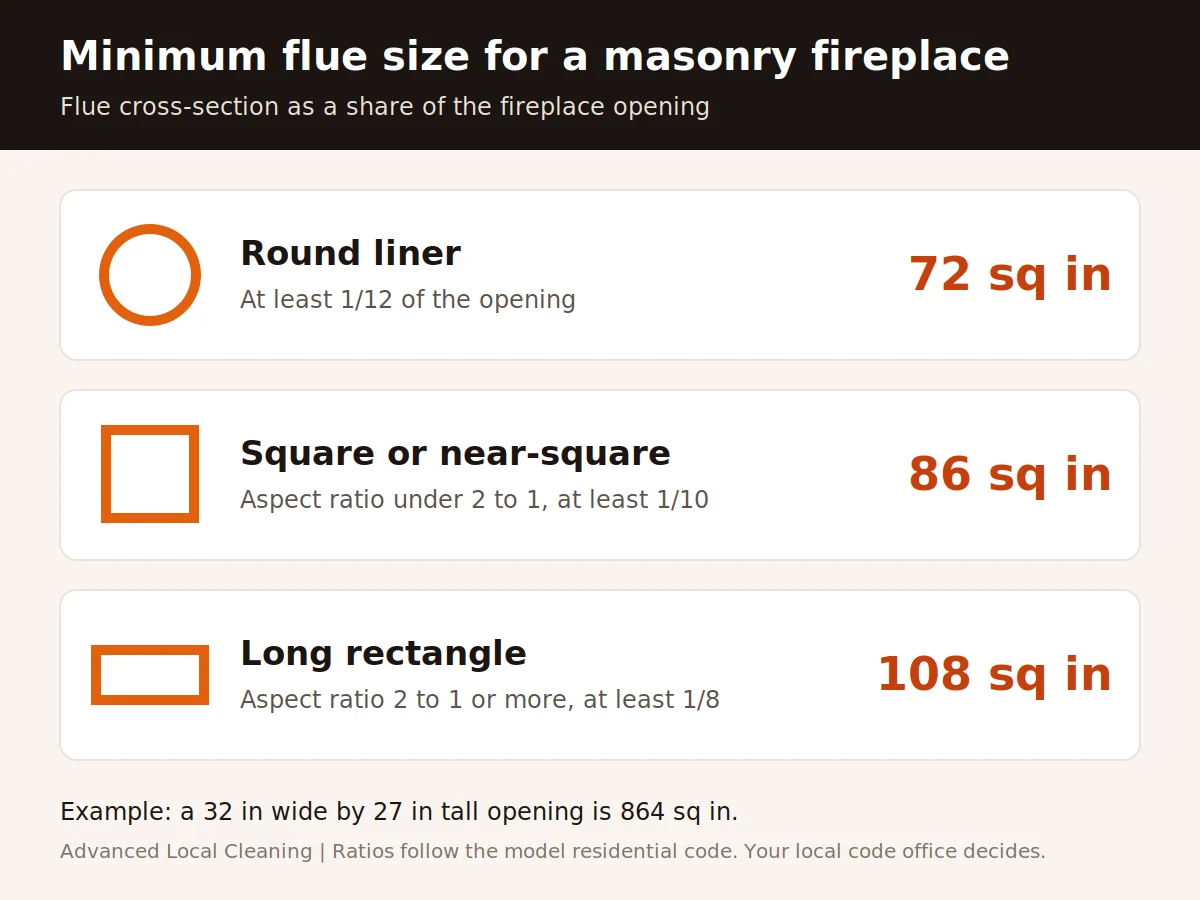
Here is a worked example. A fireplace opening 32 inches wide and 27 inches tall is 864 square inches. One twelfth of that is 72 square inches, which a 10 inch round liner clears comfortably at about 78 square inches, while an 8 inch round liner comes in around 50 and falls short. At one tenth, a square flue needs about 86 square inches of open area. Because the number that counts is the net opening inside the liner, a tile listed as one size on paper can be noticeably smaller once you subtract the wall thickness, which is one reason field measurements matter more than what someone remembers from the original build.
Code details vary by jurisdiction and by year of adoption, and chimney height and the design of the smoke chamber also feed into what a builder chooses. Treat the numbers here as the general framework and your city's building department as the final word on a specific project.
Signs your flue is too small
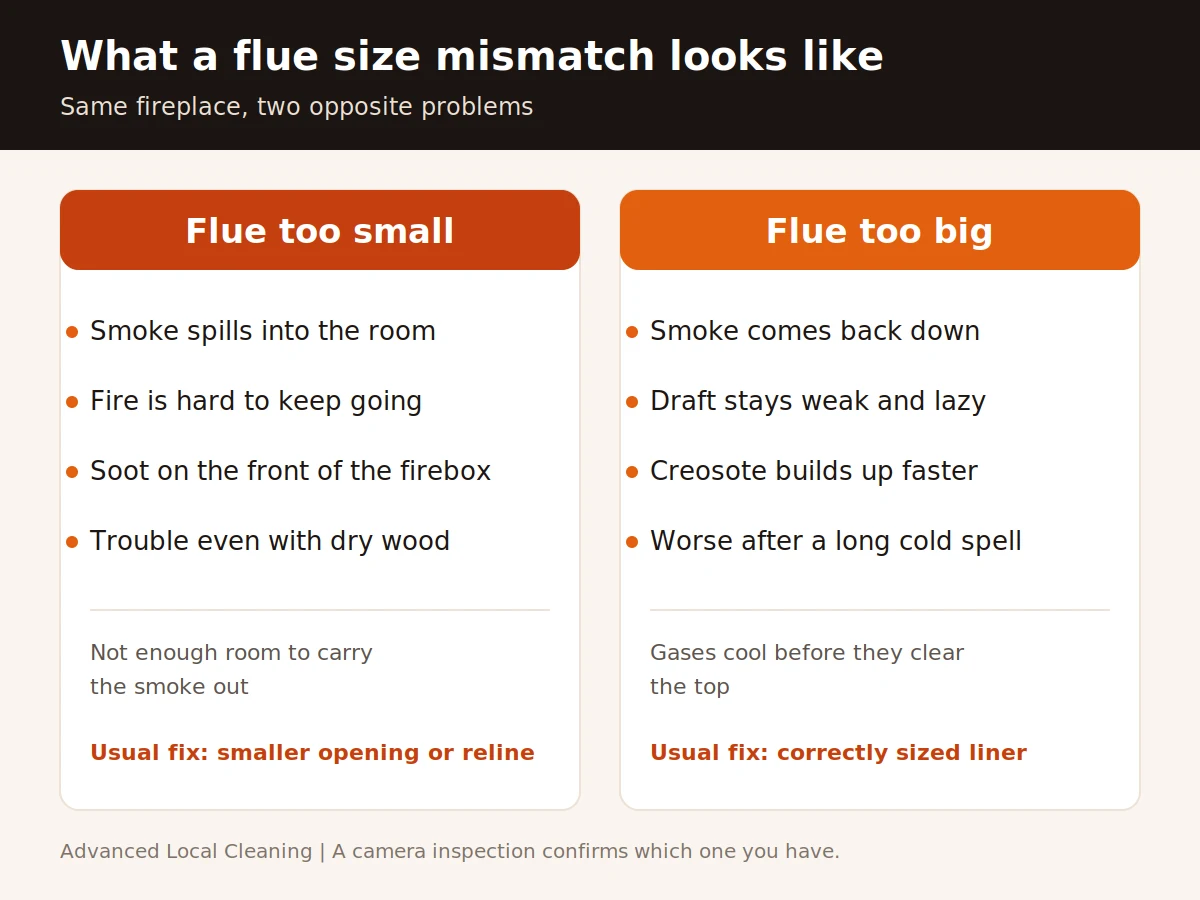
An undersized flue is the more serious of the two mismatches, because the smoke has nowhere to go. It usually shows up as smoke rolling out into the room on a normal day, not just when the wind is up. You may notice the fire is hard to keep lit, that soot collects on the front of the firebox and the brick above the opening, or that the fireplace smokes even with well-seasoned wood and a warmed-up flue. Because the gases move slowly, a small flue can also collect creosote quickly, which brings a second problem on top of the first. If you have seen the layered black deposits described in our creosote stages guide, the size of the flue is one of the things worth checking.
Signs your flue is too big
An oversized flue is easier to live with and easier to miss. The extra volume gives the rising gases room to cool before they reach the top, and cooler gases rise more lazily. The fire may burn, but the draft feels weak, smoke can drift back down on a still day, and creosote condenses on the cooler walls of the flue faster than it should. The trouble tends to be worse after a stretch of cold weather, and it is common after a wood stove or insert is connected to an old flue. A rule of thumb from hearth industry sources is that a flue more than about three times the size of an appliance's outlet starts to cool the smoke too much.
Why flue and fireplace end up mismatched
Most mismatches are not original mistakes. They come from changes made later. A homeowner installs a gas log set, a wood stove or a fireplace insert into an existing chimney, and the appliance was never matched to the flue above it. A damaged tile liner is replaced with whatever size was on hand. A fireplace is remodeled with a wider or taller opening while the flue stays where it was. In North Texas, where masonry chimneys and newer prefab systems sit side by side in many neighborhoods, we also see homes where nobody is sure which type of chimney they have, which is why it helps to confirm whether your chimney is prefab or masonry before anything is measured.
Tight modern construction can make a marginal flue look worse than it is. A house that is sealed well enough to starve the fireplace of makeup air can produce smoke problems that look like a sizing issue and are not one. That is one reason to have the flue measured rather than assume.
How to check yours
You can do the first half from the living room. Measure the width and height of the fireplace opening in inches and multiply them together. Write that number down. The second half, finding the flue size, is where it gets harder, because the liner is inside the chimney. Sometimes a flashlight aimed up through the open damper shows the tile shape, but a tile can look bigger from below than its net opening really is, and you should not climb onto a roof to measure it.
A camera inspection removes the guesswork. A technician runs a camera up the flue, sees the liner material and its condition, measures the net opening and compares it to your fireplace. It also catches cracked or missing tiles at the same time, which is a separate reason a flue can misbehave. Our sweep and inspection visits start at $99, and if the numbers do not line up, you get the findings and the options before anyone quotes a repair.
What fixes a mismatch
The fix depends on which direction the mismatch runs and on the condition of the liner. When the flue is too large for the appliance connected to it, the usual answer is a correctly sized stainless steel liner run the full height of the chimney, which restores a snug channel and a proper draft. When the flue is too small for the fireplace opening, either the flue has to be replaced with a larger one, which is a bigger job, or the opening has to be reduced so the two match, which a mason can do by adjusting the opening's dimensions. Neither is a do-it-yourself project.
Liner work is not cheap, and prices depend on chimney height and liner type. National estimates for a properly sized replacement liner run from about $1,500 to $5,000, and a written quote after a camera inspection is the only number that applies to your house. Our chimney liner installation page explains the options, and the wider chimney services page shows how that work fits with sweeping, repair and inspection.
Not sure your flue fits your fireplace?
We scan the flue with a camera, measure it against the opening and tell you plainly what we find. CSIA and NFI certified, based in Plano, serving DFW since 2013.
Common questions about chimney flue size
What is a chimney flue?
The flue is the open passage inside a chimney that carries smoke and combustion gases out of the house. It is lined with clay tile, stainless steel or a poured-in-place lining, and that liner sets its shape and size.
How big should a chimney flue be?
For a masonry fireplace, the flue area should be about one tenth of the fireplace opening, with one eighth used for short chimneys. The model residential code allows one twelfth for a round liner, one tenth for a square one and one eighth for a long rectangle.
Can a chimney flue be too big?
Yes. An oversized flue lets the rising gases cool before they clear the top, which weakens the draft and lets creosote condense faster on the flue walls. It is common after a stove or insert is connected to an old flue.
How do I measure my flue?
Measure the fireplace opening width and height yourself and multiply them. Measuring the flue means seeing the liner, and the safest way is a camera inspection from the firebox, since the net opening inside a tile is smaller than its outside dimensions.
How much does it cost to fix a flue that is the wrong size?
National estimates for a properly sized replacement liner run from roughly $1,500 to $5,000, depending on chimney height and liner type. A written quote after a camera inspection gives the number that applies to your house.